Introduction
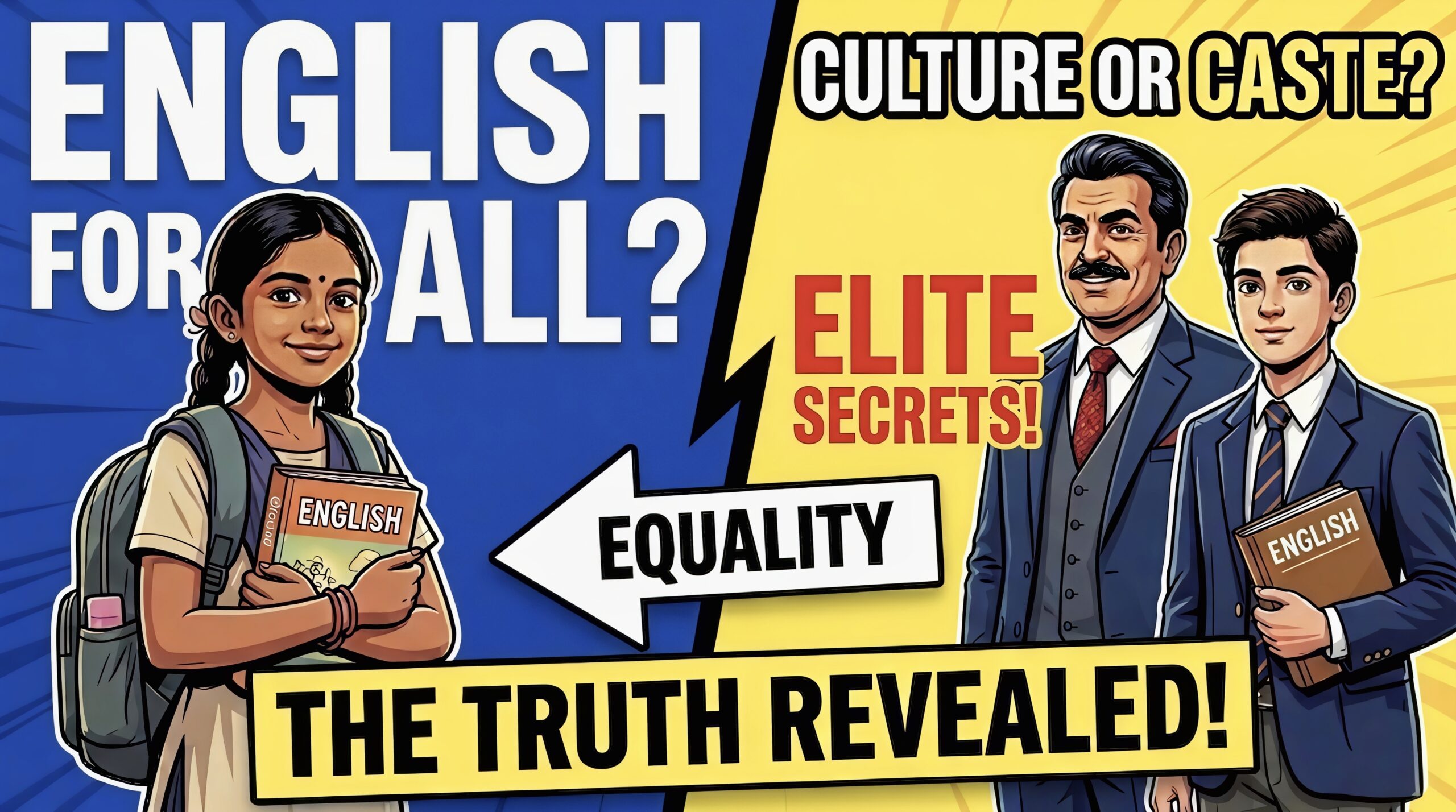
In 2019, the government of Andhra Pradesh made a major decision. It introduced English as the main medium of instruction in government schools. This change aimed to help students from poor backgrounds compete better in jobs and higher education.
However, this decision created a big debate. Some people said it would harm local culture. Others supported it as a step toward equality.
So, what is the real issue? Is it about culture, or something deeper like caste and class?
Why English Medium Was Introduced
The government wanted to solve a serious problem. Students from government schools were struggling because they lacked English skills.
Main Goals of the Policy
- Improve job opportunities for students
- Help students succeed in higher education
- Reduce the gap between private and government schools
- Provide equal opportunities for all
English is widely used in:
- Business
- Technology
- Science
- Global communication
Without English, many students are left behind.
Opposition to English Medium
Many political leaders and media groups opposed the decision.
Common Arguments Against English
- It will damage local languages like Telugu
- It is against Indian culture
- Students should learn in their mother tongue
Some well-known personalities also criticized the move.
The Hypocrisy in the Debate
A major issue raised in the article is double standards.
👉 Many leaders who oppose English:
- Send their own children to English medium schools
- Prefer international education
- Use English in daily life
This creates an unfair situation.
Key Question
If English is bad, why do elites choose it for their own children?
History of Language and Power in India
Language has always been linked to power and social status in India.
1. Ancient Period
- Sanskrit was used by elites
- Common people had no access
2. Medieval Period
- Persian became the language of rulers
- Again, only elites benefited
3. British Period
- English became the language of power
- It opened doors to jobs and administration
Result
Language acted as a barrier.
It helped powerful groups stay on top and kept others behind.
English and Social Inequality
Even after independence, English remained important.
Problem
- Rich students learn English in private schools
- Poor students study in regional languages
This creates:
- Job inequality
- Education gap
- Social divide
Students without English skills struggle in:
- Competitive exams
- Corporate jobs
- Global opportunities
Why English Can Empower the Poor
Supporters of the policy believe English can change lives.
Benefits of English Education
- Better job opportunities
- Access to global knowledge
- Confidence in communication
- Equal competition with privileged groups
Some intellectuals argue that English is not just practical, but also liberating.
The Real Issue: Caste and Class
The article strongly argues that the debate is not about culture.
Real Reasons Behind Opposition
- Fear of losing social control
- Protection of privilege
- Maintaining class and caste hierarchy
English gives power.
If everyone learns it, power becomes equal.
Conclusion
The introduction of English medium in government schools is a big step toward equality.
The debate is not just about language.
It is about who gets opportunities and who does not.
Final Thought
Opposing English education for poor students while choosing it for rich children shows that the issue is not culture.
👉 It is about caste and class inequality.