By Gopavajhala Diwakar
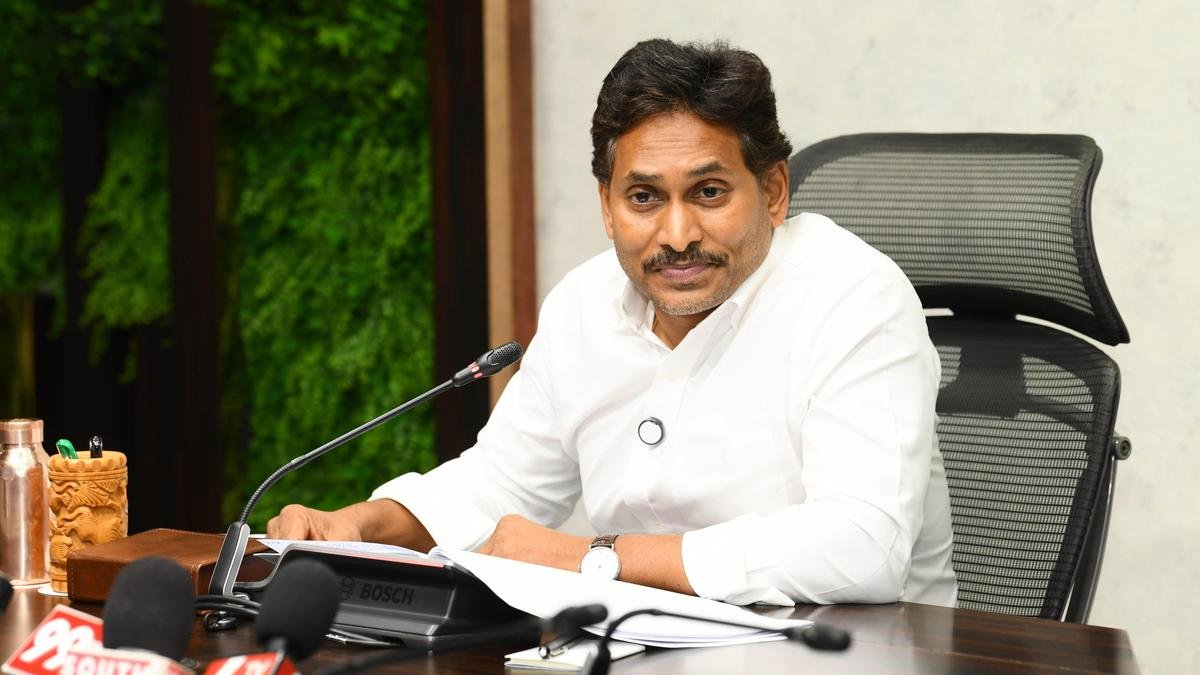
YS Jagan Mohan Reddy’s stand on the Election Commission of India has renewed the debate over his political relationship with Prime Minister Narendra Modi and the BJP-led government. While YSRCP has supported several government initiatives in Parliament, it has also opposed key Bills on constitutional, minority-rights and state-specific issues.
The political relationship between YSR Congress Party (YSRCP) chief Y. S. Jagan Mohan Reddy and Prime Minister Narendra Modi is once again under discussion. Jagan’s recent criticism of the Election Commission of India (ECI) and his support for protesters arrested in connection with a demonstration against the poll watchdog have raised questions about his political strategy.
For years, critics have described Jagan as a silent supporter of the Modi government. However, YSRCP’s parliamentary record presents a more complex picture. The party has supported several important decisions of the BJP-led government while opposing other legislative proposals.
This raises an important question: Is Jagan Mohan Reddy a political ally of Narendra Modi, or does he follow an issue-based approach?
YSRCP’s Political Relationship With the BJP
YSRCP’s support for candidates in presidential and vice-presidential elections has often been cited as evidence of its political closeness to the BJP.
In 2012, while Jagan was in jail in connection with the disproportionate-assets case, YSRCP supported the United Progressive Alliance’s presidential candidate, Pranab Mukherjee, and vice-presidential candidate, Hamid Ansari. The party maintained that elections to the country’s highest constitutional offices should be considered separately from ordinary political differences.
Under the Modi government, YSRCP supported NDA presidential candidate Ram Nath Kovind in 2017 and vice-presidential nominee M. Venkaiah Naidu. In 2022, the party backed Droupadi Murmu for president. In 2025, it also supported C. P. Radhakrishnan in the vice-presidential election.
These decisions indicate that YSRCP has cooperated with different political formations on constitutional appointments. However, supporting candidates in such elections does not automatically establish a formal political alliance.
YSRCP Supported Some Modi Government Bills but Opposed Others
YSRCP has supported several legislative initiatives introduced by the BJP-led government in Parliament. Its votes have been significant on occasions when the BJP lacked a majority in the Rajya Sabha.
However, the party has also opposed specific Bills, challenging the argument that it consistently supports the Modi government.
Opposition to the FRDI Bill
One major example was the Financial Resolution and Deposit Insurance (FRDI) Bill, 2017.
YSRCP opposed the proposed legislation over concerns that it could expose bank depositors to risks in the event of a financial institution failing. The party argued that depositors’ hard-earned savings needed stronger protection.
The Union government withdrew the Bill in August 2018 for further examination and reconsideration.
YSRCP’s Stand on the Waqf Amendment Bill 2025
YSRCP strongly opposed the Waqf (Amendment) Bill, 2025, and voted against it in Parliament.
The party raised concerns about constitutional protections, religious freedom and the rights of religious communities to manage their affairs. It also objected to provisions concerning the inclusion of non-Muslim members in Waqf governance structures.
This position highlighted YSRCP’s willingness to oppose the BJP government on legislation involving minority rights and constitutional questions.
Opposition to the Triple Talaq Bill
YSRCP also opposed the Muslim Women (Protection of Rights on Marriage) Bill, 2019, commonly known as the Triple Talaq Bill.
During the Rajya Sabha debate on July 30, 2019, YSRCP MP V. Vijayasai Reddy stated that the party had decided to oppose the Bill and vote against it.
The party’s position provides another example of its differences with the BJP-led government on selected legislative issues.
Jagan Mohan Reddy’s Position on the Uniform Civil Code
Jagan’s position on the proposed Uniform Civil Code (UCC) also reflected the party’s emphasis on consultation.
He called for discussions involving the Union government, the Law Commission, the Supreme Court and various personal law boards. He stressed that India’s religious and cultural diversity should be considered before making changes to personal laws.
YSRCP’s position was that communities affected by such changes should be consulted.
These examples suggest that the party’s relationship with the BJP cannot be assessed solely through its support for government legislation. Its opposition to selected proposals is also relevant when evaluating its political position.
Amaravati Capital Issue: A Major Point of Difference
The Amaravati capital issue has emerged as another area of disagreement between YSRCP and the BJP-led government.
YSRCP opposed the Andhra Pradesh Reorganisation (Amendment) Bill, 2026, which sought to establish Amaravati as the sole capital of Andhra Pradesh. The party argued that a single-capital model could concentrate development in one region instead of promoting balanced growth across the state.
The party also raised concerns about the financial cost of the capital project, land acquired from farmers and the need to protect their interests. YSRCP MPs staged a walkout during the proceedings.
The dispute highlights the importance of state-specific political interests in Jagan’s decisions. A party may support the Union government on some national issues while opposing its policies when they conflict with its position on state matters.
Election Commission Controversy: Is Jagan Changing His Political Strategy?
Jagan Mohan Reddy’s recent stand on the Election Commission of India has brought renewed attention to his relationship with the BJP.
In September 2026, Jagan called for a review of the law governing the appointment of Election Commissioners, despite YSRCP’s earlier support for the legislation in Parliament.
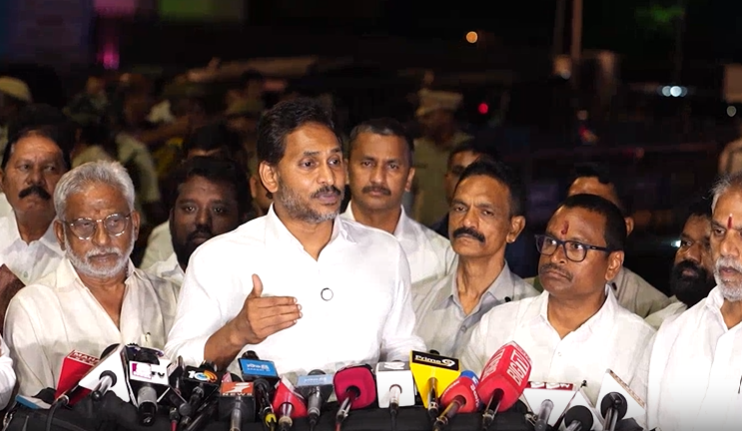
More recently, he expressed support on X for protesters arrested during demonstrations against the Election Commission. His remarks drew criticism from BJP leaders in Andhra Pradesh. The post reportedly received more than one million views within a few hours.
The controversy is significant because the Election Commission plays a central role in conducting elections and protecting electoral processes.
Jagan’s criticism of the poll watchdog has prompted questions about whether he is reconsidering his approach towards the Modi government. It has also brought renewed scrutiny of YSRCP’s earlier parliamentary decisions.
However, criticism of the Election Commission does not necessarily mean that Jagan intends to join the INDIA bloc or formally distance his party from the BJP. YSRCP has not been a formal constituent of the NDA, even though it has supported the government on several occasions.
Is YSRCP Moving Away From Modi or Continuing Issue-Based Politics?
The question of whether Jagan is moving away from Modi depends on whether his recent criticism represents a temporary disagreement or the beginning of a broader political shift.
YSRCP’s record shows three broad patterns:
- Political cooperation: The party has supported presidential and vice-presidential candidates nominated by both the UPA and NDA.
- Selective legislative support: It has backed several initiatives of the Modi government in Parliament.
- Issue-based opposition: It has opposed certain Bills and policies involving minority rights, constitutional concerns and Andhra Pradesh’s interests.
This record makes it difficult to describe YSRCP simply as an extension of the BJP. At the same time, its support for key government initiatives has helped fuel criticism that it has indirectly assisted the ruling party at the Centre.
The more important question is whether Jagan will continue this selective approach or move towards a more sustained confrontation with the BJP-led government.
Conclusion: Political Ally or Issue-Based Supporter?
YS Jagan Mohan Reddy’s political relationship with Narendra Modi appears to be defined by selective cooperation rather than a formal alliance.
YSRCP has supported several decisions of the Modi government while opposing legislation and policies that it considers inconsistent with its stated positions or Andhra Pradesh’s interests. Its recent stand on the Election Commission has added a new dimension to this relationship.
For now, the available political record points to cooperation on selected issues without formal NDA membership. Whether the Election Commission controversy marks a lasting change in Jagan’s political strategy remains to be seen.
The coming months may provide a clearer picture of whether YSRCP continues its issue-based approach or begins a broader political realignment.