
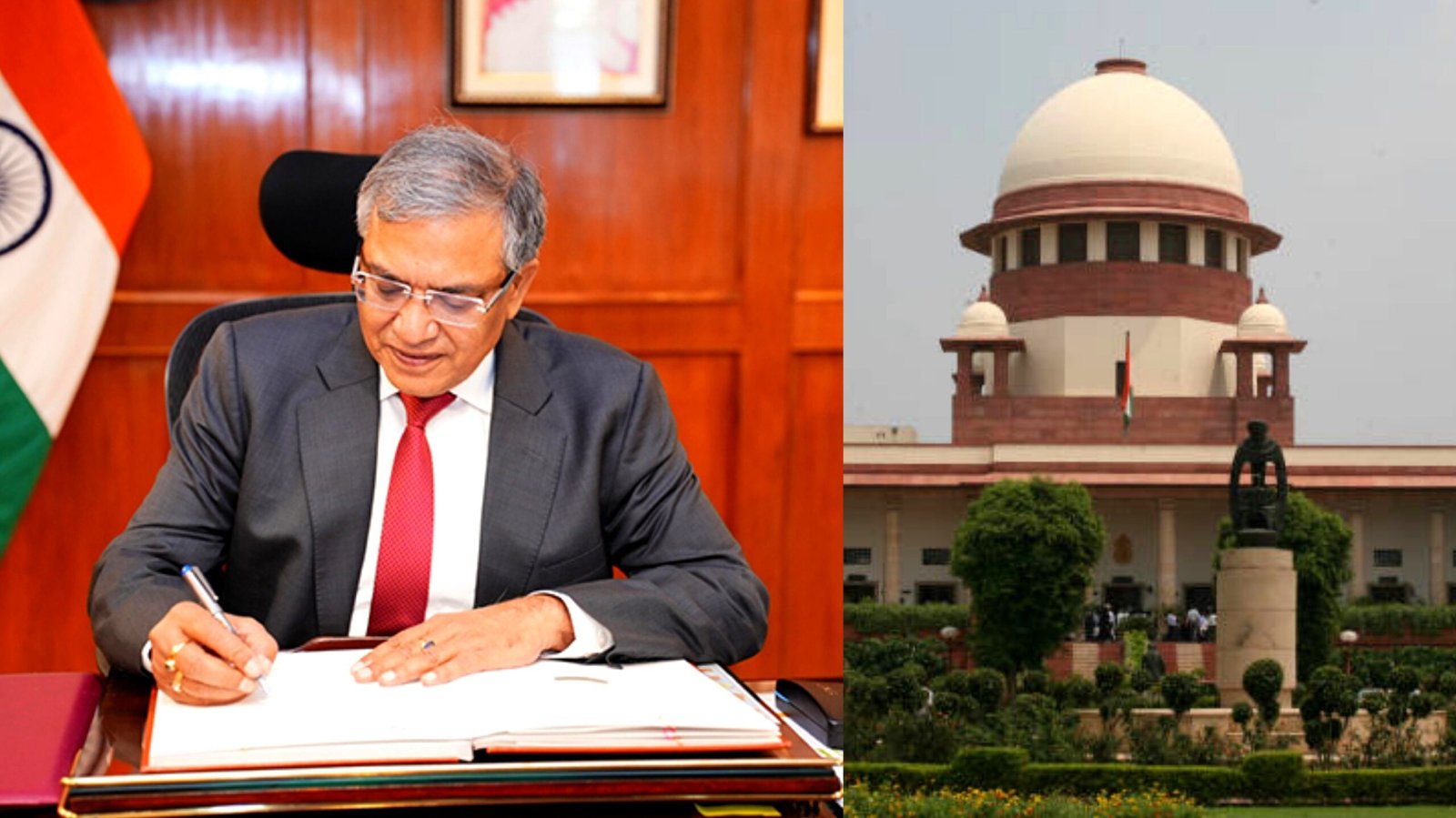
New Delhi, Oct 5: The Supreme Court on Monday issued notices to the Election Commission of India (ECI) and the Centre on a petition challenging the manner in which decisions were allegedly taken by the poll panel under Chief Election Commissioner (CEC) Gyanesh Kumar without the approval of the other two Election Commissioners.
A bench comprising Chief Justice of India Surya Kant and Justices Joymalya Bagchi and V. Mohana sought responses within a week after hearing submissions from senior advocate Vikas Singh.
The bench observed that decisions of the Election Commission are required to be taken either unanimously or by majority. It said it presumed that this procedure was followed in all decisions taken by the poll panel.
PIL Questions CEC’s Individual Powers
The Public Interest Litigation (PIL), filed by Patna resident Rakesh Kumar Singh, questioned whether the CEC had been individually exercising powers that legally belong to the Election Commission as a constitutional body.
The petitioner has sought a declaration that any such decisions taken without the required approval were unauthorised. The plea also sought appropriate legal action if violations were established.
The petition further requested the Supreme Court to prevent CEC Gyanesh Kumar from exercising his functions pending the final hearing of the case.
It also sought directions that the business of the Election Commission be conducted through the unanimous decisions of Election Commissioners Sukhbir Singh Sandhu and Vivek Joshi during that period.
Election Commissioners Raised Objections Over SIR Decisions
The case assumes significance following a report by The Indian Express published on September 25.
According to the report, Election Commissioners Sukhbir Singh Sandhu and Vivek Joshi had raised objections on record at least 14 times over a period of 10 months regarding decisions and orders related to the Special Intensive Revision (SIR) of electoral rolls.
The two Election Commissioners reportedly stated that some of these decisions were issued without their knowledge or recommendation.
The disclosures have raised questions over the decision-making process within the Election Commission, particularly regarding the role and powers exercised by the CEC.
Election Commission Defends Its Decisions
The Election Commission, however, has rejected any suggestion that its decisions lacked legal validity.
The poll panel said differences of opinion and observations are a normal part of deliberations within any institution. It maintained that all orders issued by the Commission had full legal sanction and were passed in accordance with established statutory procedures.
The Supreme Court’s notice now requires the Election Commission and the Centre to respond to the allegations raised in the petition.
The case could have wider implications for the internal decision-making process of the Election Commission, the role of the Chief Election Commissioner and the manner in which major electoral decisions, including those related to electoral roll revisions, are taken.





