By Gopavajhala Diwakar
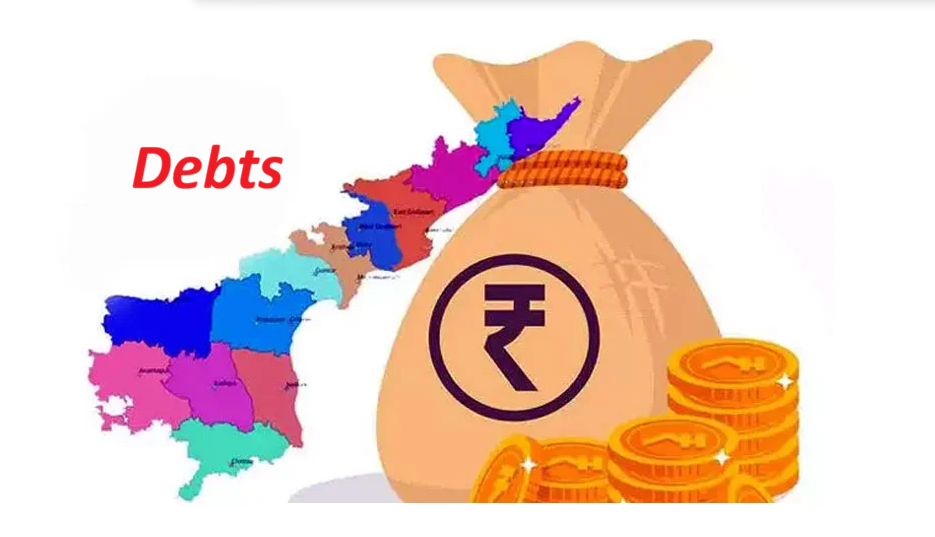
Andhra Pradesh has used nearly 77 per cent of its annual budget provision for borrowings and other liabilities in the first six months of the 2026-27 financial year. At the same time, the state’s revenue deficit has crossed its full-year budget estimate by more than 80 per cent, raising concerns about its financial position.
According to the Comptroller and Auditor General (CAG) report, Monthly Key Indicators for September 2026, Andhra Pradesh’s cumulative net borrowings and other liabilities stood at Rs 58,421.83 crore by the end of September. This is against the annual budget provision of Rs 75,868.09 crore for 2026-27.
The figures show that the state has already utilised 77 per cent of its annual borrowing and liability provision in just six months.
AP Revenue Deficit Crosses Full-Year Budget Estimate
The state’s revenue deficit reached Rs 39,780.64 crore by September 2026, significantly exceeding the full-year budget estimate of Rs 22,002.50 crore.
This means the revenue deficit has reached 180.8 per cent of the annual target, indicating a widening gap between the government’s revenue income and routine expenditure.
Meanwhile, Andhra Pradesh’s fiscal deficit stood at Rs 58,421.83 crore, accounting for 77 per cent of its annual estimate of Rs 75,868.08 crore.
The primary deficit also reached Rs 38,778.89 crore, slightly exceeding its full-year budget estimate of Rs 38,587.53 crore.
However, the total amount under net borrowings and other liabilities should not be considered entirely as fresh market borrowing.
Revenue Expenditure Higher Than Revenue Receipts
Andhra Pradesh spent Rs 1,28,075.56 crore on revenue expenditure between April and September 2026. This represents 50 per cent of the annual allocation of Rs 2,56,142.64 crore.
In comparison, the state’s revenue receipts stood at Rs 88,294.92 crore, accounting for just 37.71 per cent of the annual target of Rs 2,34,140.14 crore.
The difference between revenue receipts and revenue expenditure has contributed to the sharp increase in the state’s revenue deficit.
Salaries, Pensions and Interest Payments Add to Financial Pressure
Committed expenditure continues to put pressure on Andhra Pradesh’s finances.
Interest payments reached Rs 19,642.93 crore, accounting for 52.69 per cent of the annual allocation of Rs 37,280.55 crore.
The government spent Rs 30,043.74 crore on salaries and wages. Pension and retirement benefit payments stood at Rs 17,780.70 crore, consuming nearly 75 per cent of the annual budget provision.
These figures highlight the growing pressure of fixed financial commitments on the state’s budget.
Capital Expenditure Remains Below 34 Per Cent
Capital expenditure, which plays an important role in infrastructure development and the creation of public assets, remained relatively low during the first half of the financial year.
Andhra Pradesh spent Rs 16,447.12 crore on capital expenditure by September, representing just 33.77 per cent of the annual allocation of Rs 48,697.70 crore.
The slow pace of capital spending is another concern, particularly when the state has already utilised a significant portion of its annual borrowing provision.
Grants-in-Aid Receipts Remain Low
The state also recorded slower-than-expected receipts under grants-in-aid and contributions.
Andhra Pradesh received Rs 5,223.90 crore under this category by September, which is only 16.09 per cent of the annual budget estimate of Rs 32,458.22 crore.
Lower-than-expected grant receipts could add to the financial pressure if the trend continues during the remaining months.
Andhra Pradesh’s Fiscal Position: What Lies Ahead?
The September 2026 CAG figures present several challenges for the Andhra Pradesh government.
The state has already utilised 77 per cent of its annual borrowing and liability provision, while its revenue deficit has reached 180.8 per cent of the full-year budget estimate. Revenue receipts remain relatively low, and capital expenditure has yet to reach 34 per cent of its annual allocation.
The next six months will be crucial for the government to improve revenue collection, control the revenue deficit and speed up infrastructure spending.
Maintaining fiscal discipline while meeting welfare commitments, salaries, pensions and interest payments will remain a major challenge.
These figures are provisional cumulative accounts up to September 2026 and should not be treated as the final audited financial position for the entire financial year.