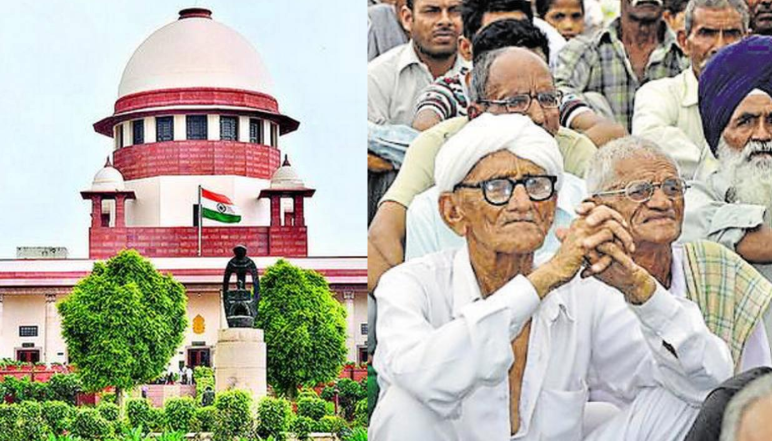
New Delhi, Nov 6: India needs to prepare for the challenges of an ageing population as fertility rates continue to decline, experts have warned. They say the country has a limited opportunity to benefit from its large working-age population, and this demographic dividend window is gradually closing.
The discussion follows the Supreme Court’s recent observation that laws penalising families for having more than two children may have lost their relevance. The court noted that India’s fear of overpopulation has weakened due to significant demographic changes over the past few decades.
According to the court, India’s Total Fertility Rate (TFR) has declined from 3 in 2003 to 1.9, indicating a major shift in population trends.
India Must Prepare for an Ageing Population
Poonam Muttreja, Executive Director of the Population Foundation of India, said the country faces two major challenges: making the most of its remaining demographic dividend and preparing for an ageing society.
She stressed the need to review India’s population policies and improve their implementation. According to her, the government should focus on developing skills among young people, encouraging more women to join the workforce and strengthening social security systems for senior citizens.
Muttreja also highlighted that India’s economic growth will largely depend on how effectively women are included in the workforce.
Declining Fertility Could Reduce the Working-Age Population
Seema Bhaskaran, a gender expert at Transform Rural India, said India’s population policies have historically focused on controlling women’s fertility and reproductive choices.
She explained that declining fertility rates will gradually increase the proportion of older people while reducing the number of young individuals entering the workforce.
Although India’s working-age population will remain relatively large in the coming years, the country must prepare for rising demand for healthcare, pensions and long-term elderly care.
Bhaskaran also stressed the importance of developing social security and healthcare programmes to support senior citizens.
Demographic Dividend Window Is Closing
Muttreja pointed out that India’s population will continue to grow for several decades, but the age structure of the population is changing.
According to projections shared by her, the working-age population is expected to reach around 66 per cent of the total population in 2031 before beginning to decline.
She warned that India has a limited period to benefit from its demographic dividend. Without proper planning, the country could miss an important opportunity for economic growth.
Experts Question Two-Child Population Policies
Experts have also questioned the effectiveness of coercive population-control measures, particularly laws that restrict government benefits or eligibility for local body elections based on the two-child norm.
Muttreja said there is no credible evidence that such policies have significantly reduced fertility rates. She pointed out that fertility rates have declined at similar speeds in states that did not implement two-child restrictions.
Instead, these policies have created difficulties for women, Dalits, Adivasis and economically weaker families. Reports of family desertion, sex-selective abortions and the non-registration of births have also raised concerns about their consequences.
She argued that such laws disproportionately affect vulnerable communities and should be repealed.
Reproductive Rights and Women’s Empowerment Should Be the Priority
Bhaskaran called for population policies that consider the cultural, economic and social conditions of individual states. She also emphasised the need to strengthen women’s reproductive healthcare and ensure that women have the freedom to make decisions about their bodies.
Muttreja said India’s fertility decline has largely resulted from individual choices rather than coercive government measures.
She recommended shifting the focus towards reproductive rights, better healthcare services and greater freedom for families to decide how many children they want.
Experts believe India must act now by investing in youth skills, women’s employment, healthcare and social security. Preparing for an ageing population while making effective use of the current working-age population will be crucial to India’s long-term economic future.