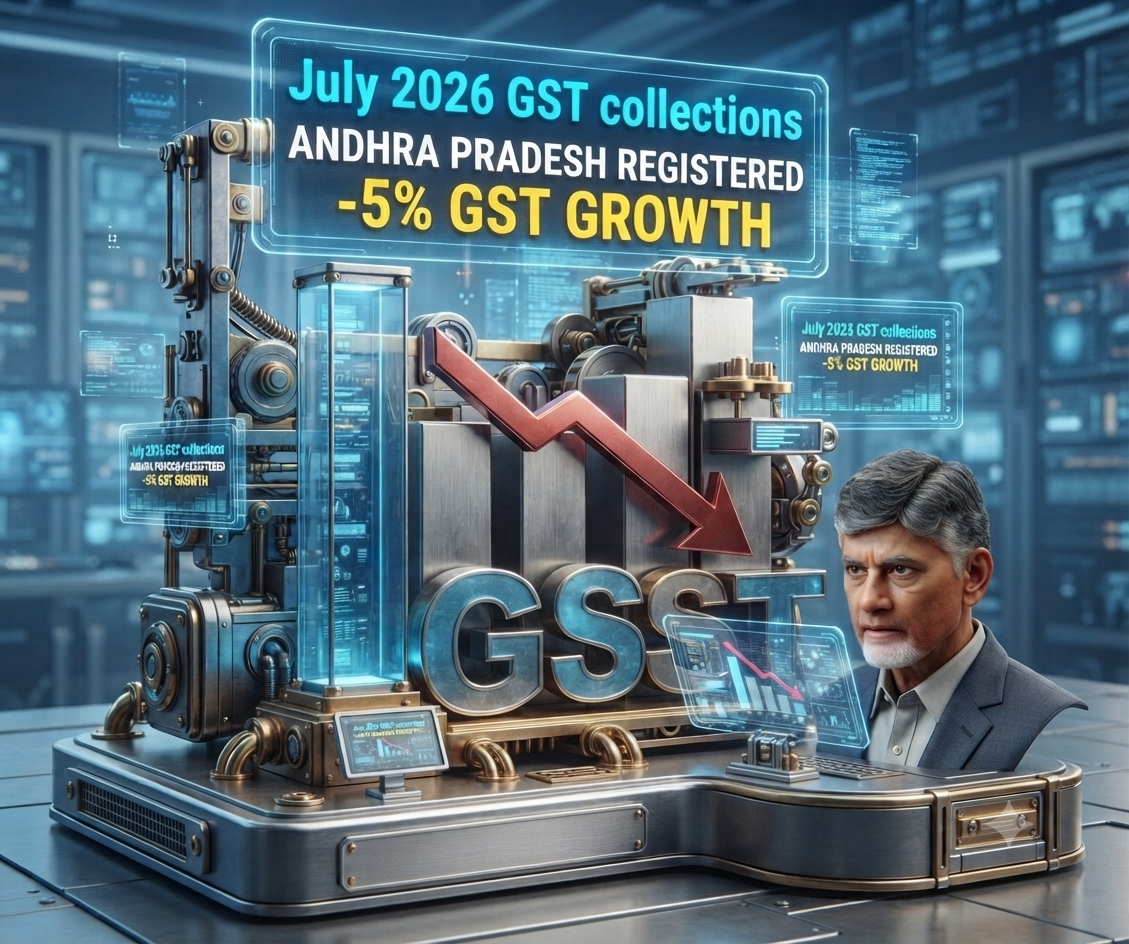
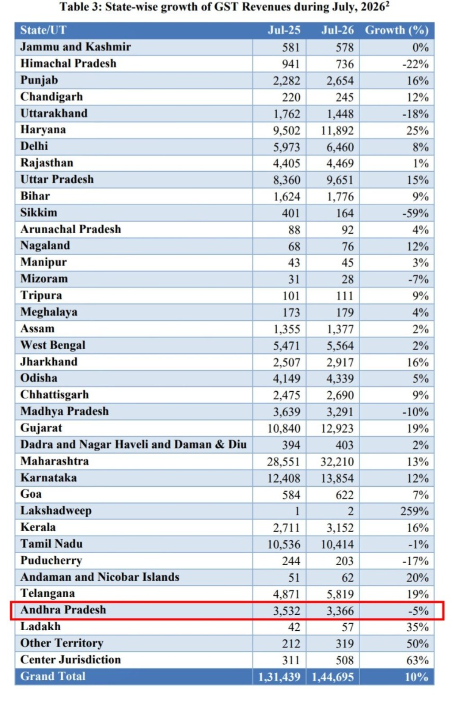
While the rest of India celebrated a strong July GST collection of Rs 2.11 lakh crore — up 15.4% year-on-year. While Andhra Pradesh under the TDP government, recorded a clear decline. Official data shows the state’s GST revenue fell by around 5% compared with July last year, dropping from roughly Rs 3,532 crore to Rs 3,366 crore in the relevant category. At a time when Telangana posted robust double-digit growth and the national average stayed healthy, Andhra’s slide stands out as a quiet indictment of the state’s economic management.
The national numbers themselves tell a revealing story. Domestic GST grew only 10.1%. The real push came from imports, which jumped 28.8%. In other words, a significant part of the country’s revenue growth is being driven by goods coming in from outside, not by a broad-based surge in local production and consumption. For a state like Andhra Pradesh, which the TDP repeatedly claims is on the path to rapid industrial revival, a decline in its own GST collections is difficult to explain away.
GST is not just an accounting figure. It is one of the cleaner real-time indicators of economic activity, formalisation and compliance. When collections fall even as the national trend moves upward, it points to weaker momentum on the ground — whether in manufacturing, trade, services or the overall formal economy. The TDP government has spent months projecting an image of decisive turnaround and investor confidence. A 5% drop in monthly GST collections undercuts that narrative more effectively than any opposition press conference.
Comparisons with neighbouring Telangana make the picture sharper. While Andhra’s numbers moved downward, Telangana continued to post strong collections. The difference is not explained by size alone. It reflects differences in economic energy, enforcement and the actual pace of business activity. For a government that came to power promising to restore Andhra’s economic pride, lagging behind both the national average and its immediate neighbour on a key revenue metric is an uncomfortable reality.
The usual defences are already being prepared: technical adjustments, IGST settlements, timing of refunds, or the impact of rate changes. Some official statements have even claimed healthy cumulative growth for the April–July period. Monthly numbers, however, still matter. A single month of decline can be dismissed. A decline that occurs while the rest of the country is rising, and while the government is busy claiming a renaissance, is harder to brush aside.
Revenue is the oxygen of governance. When GST collections weaken, the state’s ability to fund salaries, welfare schemes, capital expenditure and the day-to-day running of administration comes under strain. The same government that has left thousands of Samagra Shiksha workers unpaid for two months now faces questions about the health of its own tax collections. The two stories are not unrelated. Both point to a gap between political claims and administrative delivery.
Andhra Pradesh does not lack potential. What it currently lacks is consistent evidence that the TDP government’s policies are translating into measurable, broad-based economic momentum. A 5% fall in GST collections in a month when the country as a whole grew strongly is not a statistical footnote. It is a warning light. The government can continue to issue press releases about “robust growth.” The numbers, for now, are saying something less flattering.