
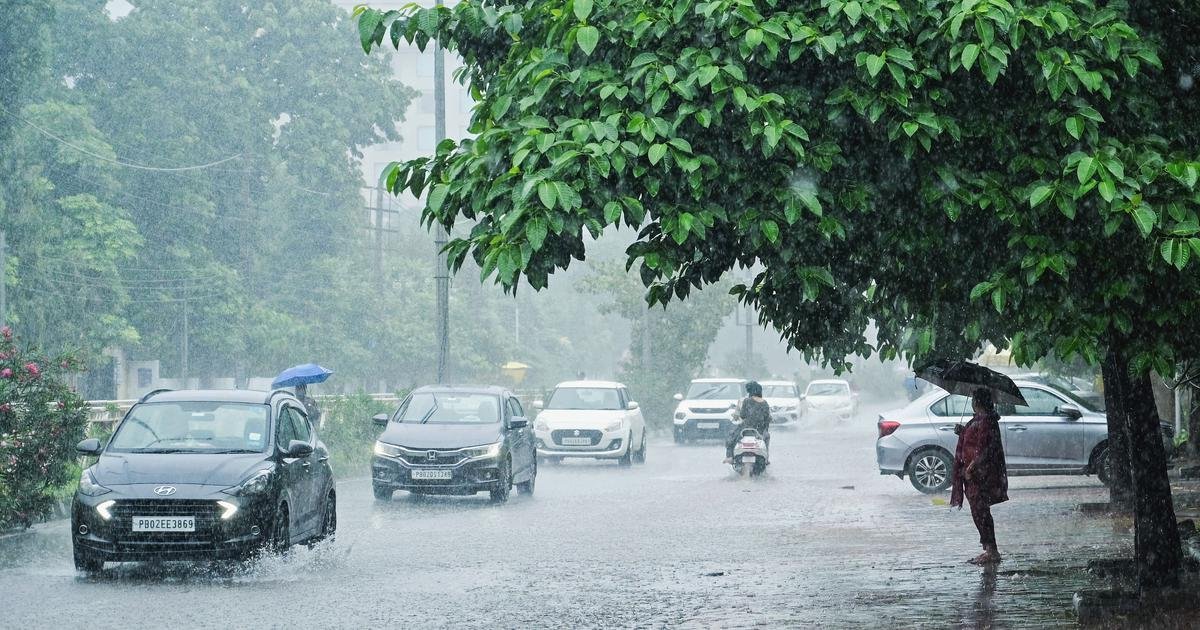
New Delhi, Oct 15: The southwest monsoon has completely withdrawn from India, marking the end of the June–September rainy season. The India Meteorological Department (IMD) announced on Thursday, October 15, 2026, that northeast monsoon rainfall activity had also begun over parts of southern India.
According to the IMD, Tamil Nadu, Puducherry, Karaikal, coastal Andhra Pradesh, Rayalaseema, south interior Karnataka, Kerala and Mahe have started receiving rainfall associated with the northeast monsoon.
Heavy Rainfall Expected in South India Until October 21
The IMD has forecast a wet spell across several parts of southern peninsular India following the onset of the northeast monsoon. Isolated heavy rainfall is likely in several areas until October 21.
The forecast is particularly significant for southern states, where northeast monsoon rainfall plays an important role in agriculture and water availability.
Residents in areas expecting heavy rainfall should follow local weather advisories and updates issued by the IMD.
Difference Between Southwest and Northeast Monsoons
India experiences two major monsoon seasons: the southwest monsoon and the northeast monsoon.
The southwest monsoon generally occurs from June to September and provides a major share of the country’s annual rainfall. It is particularly important for the kharif crop season, which includes crops such as rice, maize and cotton.
The northeast monsoon, also known as the retreating monsoon, generally affects parts of India between October and December. It is especially important for Tamil Nadu and other parts of southern India, supporting agriculture and replenishing water resources.
Southwest Monsoon Rainfall Below Normal in 2026
The 2026 southwest monsoon season ended with 759.4 mm of rainfall, which was 12.6 per cent below the long-period average of 868.6 mm, according to the IMD.
The rainfall deficit has raised concerns about water availability and agricultural conditions in regions that depend heavily on seasonal rainfall.
The southwest monsoon is a key factor in India’s agricultural economy, influencing crop production, rural incomes and reservoir levels.
El Niño Conditions Linked to Monsoon Rainfall Deficit
The prevailing El Niño conditions over the tropical Pacific Ocean have been identified as one of the factors behind the below-normal southwest monsoon rainfall in 2026. These conditions emerged in June and have strengthened since then.
El Niño is a phase of the El Niño–Southern Oscillation (ENSO), a climate pattern involving changes in sea surface temperatures across the central and eastern tropical Pacific Ocean, along with changes in atmospheric conditions.
El Niño conditions are often associated with weaker southwest monsoon rainfall in India, although the actual impact varies from year to year.
The opposite phase, La Niña, is generally associated with cooler global temperatures, while the neutral phase occurs when neither El Niño nor La Niña conditions dominate.
Strong El Niño Event Forecast for December 2026
Global weather agencies, including the World Meteorological Organization (WMO), have forecast that the current El Niño event could peak in December 2026. According to the forecasts cited in the report, the event could become the strongest since observations began in 1950.
The El Niño conditions are also expected to persist until February 2027.
The development and duration of this climate event will remain important factors for global weather patterns. Its potential effects on rainfall, temperatures and agricultural conditions will depend on how the event evolves over the coming months.
Conclusion
With the southwest monsoon withdrawing completely, the northeast monsoon has begun bringing rainfall to southern India. The IMD has forecast a wet spell with isolated heavy rainfall until October 21.
Meanwhile, below-normal southwest monsoon rainfall and strengthening El Niño conditions remain important weather developments to monitor as India enters the northeast monsoon season.





