Bengaluru, Oct 13 Karnataka Deputy Chief Minister G Parameshwara on Tuesday said the state Cabinet would discuss the High Court verdict striking down the enhancement of reservation for SCs, STs and decide on the further course of action, including the possibility of approaching the Supreme Court.
He said the government would examine all legally permissible options in consultation with the Advocate General and the Law Department before taking a decision.
The Karnataka High Court on Monday struck down provisions of a 2022 state law that increased reservation for Scheduled Castes (SCs) from 15 to 17 per cent and for Scheduled Tribes (STs) from 3 to 7 per cent, holding that the enhanced quota breached the 50 per cent ceiling.
The 50 per cent ceiling was laid down by the Supreme Court in the 1992 case of Indra Sawhney vs Union of India (1992) and subsequently upheld in numerous decisions.
“The previous BJP government headed by Basavaraj Bommai had increased reservation for SCs from 15 per cent to 17 per cent and for STs from 3 per cent to 7 per cent, taking the overall quota to 56 per cent, beyond the 50 per cent ceiling,” Parameshwara pointed out.
The present government had also followed the revised reservation structure in several recruitment processes after coming to power, he told reporters, adding that the state had defended the enhanced quota when it was challenged in court.
Emphasising the objective of reservation, the Deputy CM said it was intended to ensure social justice and equal opportunities for communities that had faced historical discrimination and exclusion from education, employment and other spheres.
B R Ambedkar had incorporated provisions for reservation into the Constitution because of its broader social purpose, he said.
Expressing his personal view on the verdict, Parameshwara said Karnataka’s social circumstances could have been considered as an exceptional case, citing Tamil Nadu’s 69 per cent reservation, which is protected through a constitutional arrangement.
He said the additional six percentage points beyond the 50 per cent ceiling in Karnataka could also have been examined in the context of the state’s social conditions and the interests of deprived communities.
The government would also assess the implications of the verdict for educational admissions and government appointments already made under the 56 per cent quota, he said.
Questions relating to the status of existing appointments, the retrospective application of the judgment and its impact on future recruitment would require detailed legal examination, he added.
Responding to allegations by the BJP leaders that the government had been negligent on the reservation issue, Parameshwara said the executive could not influence judicial decisions.
“Judges decide matters in accordance with law. The government cannot influence judges or ask them to deliver a particular verdict,” he said, adding that challenging a judgment before a higher court was among the legal options available to the state.
If the overall reservation percentage had to be reduced, the internal reservation percentages might also require proportionate revision, he said, cautioning that such a move could affect opportunities available to different communities.
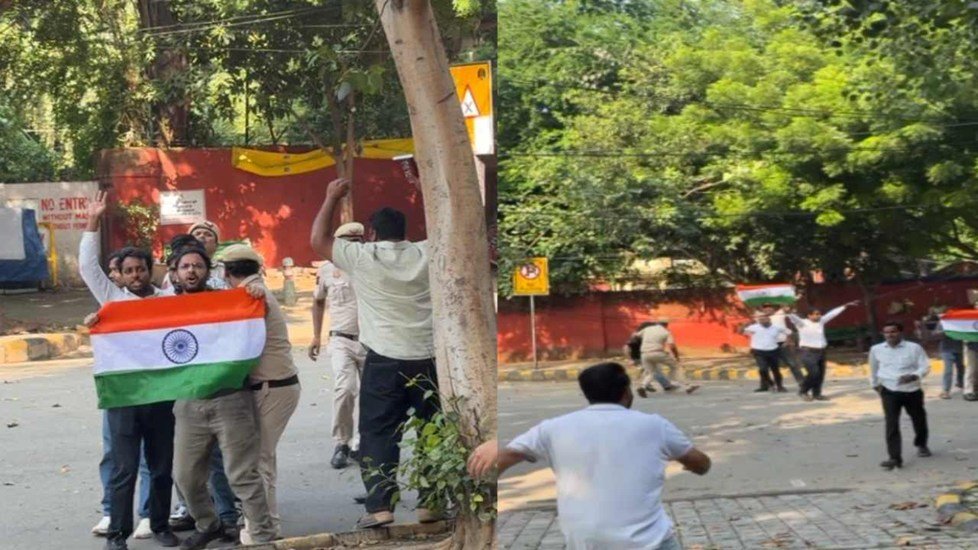
Asked about reports that Chief Minister D K Shivakumar was pushed by security personnel during a protest against the Election Commission in Delhi on Monday, Parameshwara said crowd management during demonstrations and large public gatherings was challenging.
He said security personnel were primarily responsible for protecting Congress leader Rahul Gandhi and preventing people from approaching him.
The chief minister had moved towards the area and was slightly pushed amid the crowd, he said, adding that security personnel prioritised their assigned protection duties even when other dignitaries were present.
On drought and disaster management, Parameshwara said greater emphasis should be placed on preventive measures and advance preparedness rather than relying primarily on relief and rehabilitation after disasters.
A national-level seminar had been organised to discuss strategies for anticipating risks, improving public awareness and preparing communities to deal with potential disasters, he said.
The government and relevant authorities should focus on informing people in advance and taking preventive steps to minimise the impact of disasters, he added.
(PTI News)