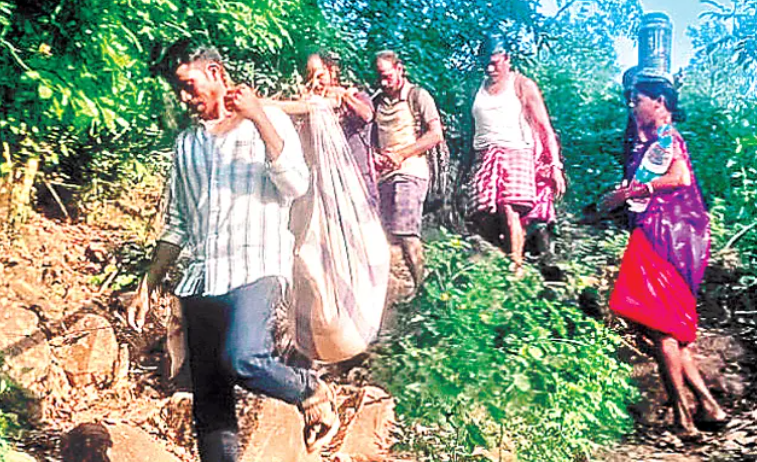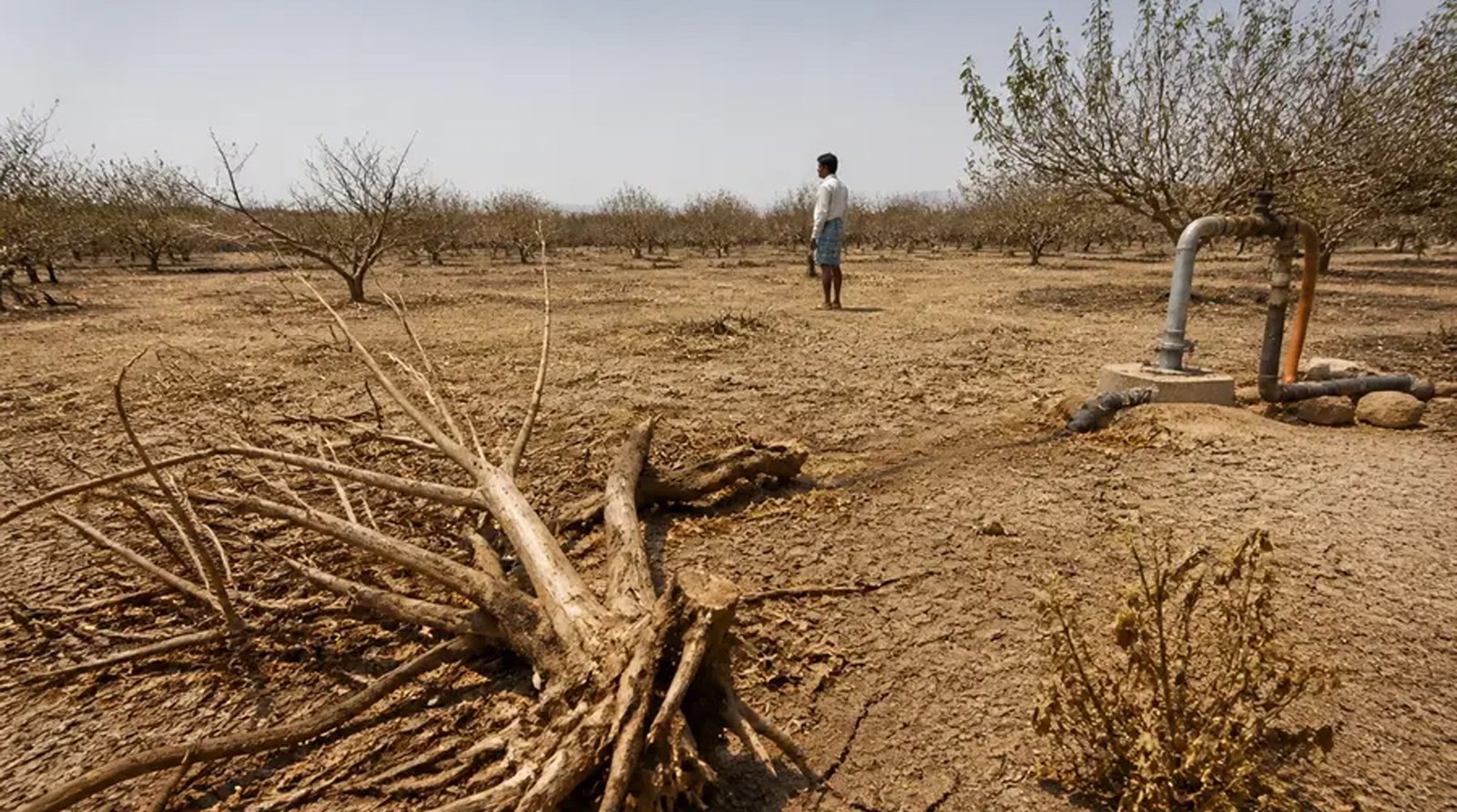
Kurnool, Oct 13: Severe drought conditions, poor monsoon rainfall and repeated crop failures have triggered large-scale migration from villages across Kurnool district in Andhra Pradesh. Thousands of farming families are leaving their homes in search of daily-wage jobs as agricultural livelihoods come under increasing pressure.
According to a report by The New Indian Express, nearly 10,000 agricultural families have already left their native villages, travelling by hired auto-rickshaws, state transport buses and trains to find work elsewhere. Local sources estimate that another 50,000 families could prepare to migrate after the upcoming Dasara festival.
The growing crisis highlights the impact of rainfall shortages on rural communities, particularly small farmers and agricultural labourers who depend on seasonal cultivation for their income.
Drought Hits Western Kurnool Regions Hard
The situation is particularly severe in the drought-affected areas of Adoni, Yemmiganur and Pathikonda. Consecutive crop failures have reduced agricultural employment opportunities, leaving many farming households struggling with mounting debts and limited sources of income.
According to The New Indian Express, agricultural labourers and small landholders from 12 severely affected mandals are migrating to cities and industrial centres in search of work.
The affected mandals include Alur, Pathikonda, Aspari, Nandavaram, Kosigi, Chippagiri, Kowthalam, Yemmiganur, C. Belagal, Kodumuru, Adoni and Mantralayam.
Many families are heading to Hyderabad, Bengaluru, Vijayawada, Guntur, Chennai, Bellary, Mumbai and Delhi. They are seeking employment at construction sites, industrial units and agricultural farms in other regions.
For these families, migration has become a way to manage household expenses and repay debts after losing income from farming.
Rainfall Deficit and Crop Failures Increase Farmer Distress
More than 80% of Kurnool’s agricultural land depends on seasonal rainfall, making farming particularly vulnerable to weak monsoons and prolonged dry spells.
The current agricultural crisis has been linked to a significant rainfall deficit and drought conditions associated with the El Niño phenomenon.
Farmers who sowed rain-fed crops such as cotton, red gram and castor after early showers in June suffered heavy losses when rainfall failed during July and August.
The financial impact has been severe. Farmers reportedly invested between ₹25,000 and ₹35,000 per acre in land preparation, seeds and fertilisers. However, crop losses have left them facing estimated losses averaging ₹50,000 per acre.
Some farmers also attempted to save their withering crops by drilling borewells to depths of 800 to 1,000 feet. These efforts often failed to provide sufficient groundwater, adding further expenses and increasing farmers’ debt burden.
With agricultural income declining and cultivation costs remaining high, many households have been left with few options other than seeking employment outside their villages.
Only 15 of 27 Mandals Included in Drought Notification
Another major concern is the extent of the government’s official drought notification.
According to the report by The New Indian Express, the state government included only 15 of Kurnool district’s 27 mandals in the early Kharif drought notification.
Kurnool District Collector A. Siri reportedly stated that the rainfall deficit reached 56% in July and 57% in August.
However, official drought assessments also consider other indicators, including vegetation conditions, groundwater availability and soil moisture. Differences in these parameters resulted in some mandals being included in the notification while others were excluded.
Farmers and agricultural unions have questioned this assessment, arguing that drought conditions affect all 27 mandals in the district.
They have warned that farmers in areas excluded from the official notification could miss out on important relief measures, including input subsidies, crop insurance benefits, loan rescheduling, interest relief and subsidised fodder.
The dispute has added to farmers’ concerns at a time when crop losses and declining rural employment are already putting household finances under pressure.
Rural Employment Scheme Faces Questions
The implementation of the rural employment guarantee programme, now known as VB-G RAM G and formerly known as MGNREGA, has also become a concern for villagers facing the drought.
According to figures cited in The New Indian Express report, the average daily wage is ₹260.38. Migrant workers and rural residents have expressed dissatisfaction, arguing that these earnings are insufficient to meet rising living expenses.
Official figures reportedly show that Kurnool district has 4.64 lakh wage seekers holding job cards, of whom only 3.24 lakh are active.
The gap has raised questions about the availability of rural employment opportunities for families that have lost their agricultural income.
DWMA Project Director I. Narasimha Reddy reportedly maintained that the administration was prepared to provide rural employment to all applicants.
However, affected families continue to face immediate financial pressures as they look for work and alternative sources of income.
Kurnool Drought Raises Concerns Over Rural Livelihoods
The growing migration from Kurnool villages reflects the wider challenges faced by rain-dependent farming communities during periods of severe rainfall deficit.
Crop failures, rising cultivation costs, inadequate groundwater and mounting debts have combined to make agriculture increasingly difficult for many small farmers.
The exclusion of several mandals from the official drought notification has also raised concerns about whether all affected farming households will receive the support they need.
As thousands of families leave their villages in search of employment, access to rural jobs, timely drought relief, crop insurance and financial assistance remains crucial to protecting vulnerable households.
The scale of the crisis will depend not only on future rainfall but also on the effectiveness of measures taken to support farmers and agricultural workers affected by crop losses.