
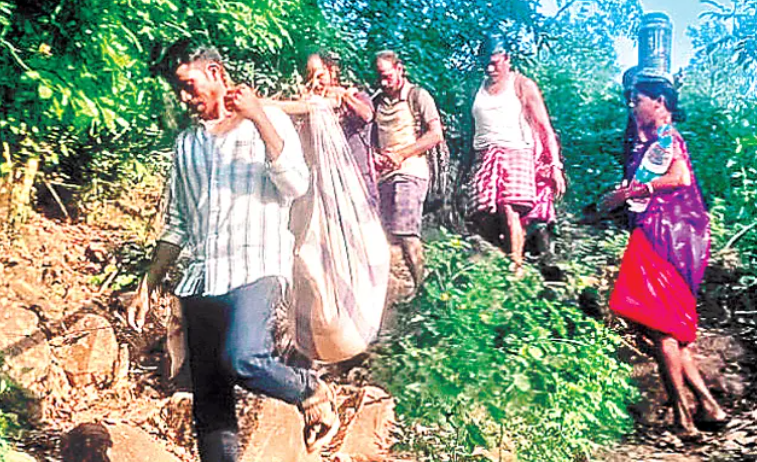
Amaravati, Oct 12: Poor road connectivity in Andhra Pradesh’s tribal villages continues to put lives at risk, with patients and pregnant women forced to travel several kilometres in makeshift stretchers to reach hospitals. Recent incidents in Vizianagaram and Alluri Sitarama Raju districts have raised serious questions about rural infrastructure and access to emergency healthcare.
Sick Woman Carried 7 KM in a Doli in Vizianagaram District
The lack of proper roads in remote tribal areas of Andhra Pradesh is creating serious difficulties for residents during medical emergencies. In several villages, ambulances and other vehicles cannot reach patients, forcing families and villagers to carry them in dolis, or makeshift stretchers.
In the latest incident, a 40-year-old woman, Majji Sannamma, from Kuridi village under Daraparthi gram panchayat in Srungavarapukota mandal of Vizianagaram district, fell seriously ill and needed immediate medical attention.
As vehicles could not reach her village, her family members carried her in a doli for nearly seven kilometres on Saturday. They crossed uneven terrain and narrow footpaths before reaching Mettapalem Junction.
From there, she was transported in a private vehicle to the Community Health Centre in Srungavarapukota for treatment.
The incident highlights the difficulties faced by tribal residents who lack access to basic road connectivity. When a medical emergency occurs, reaching the nearest hospital can become a major challenge.
Pregnant Woman Carried 8 KM Through Hills and Streams
A similar incident was reported earlier this month in Alluri Sitarama Raju district.
Korra Damini, a pregnant woman from Tadakapalli village under Ammavari Dharakonda panchayat in Gudem Kotha Veedhi mandal, developed labour pains during the night. However, the absence of a proper road prevented even two-wheelers from reaching the village.
As a result, she had to remain in the village overnight. The following morning, her family members and other villagers carried her in a doli for nearly eight kilometres.
They crossed hills, rocky stretches and streams to reach Shyamagedda, where an ambulance was available. She was then taken to the Chintapalli Community Hospital, where she delivered a healthy baby girl.
Both the mother and child were reported to be safe.
While their safe delivery brought relief, the incident exposed the serious challenges pregnant women face in reaching hospitals in remote tribal areas. The lack of reliable roads and emergency transport can put the lives of both mothers and newborns at risk.
Bridge Shortage Creates More Problems in Alluri District
Road connectivity is not the only concern in the tribal areas of Alluri Sitarama Raju district. The shortage of permanent bridges has also affected access to essential services.
In a tragic incident, 28-year-old tribal woman Pangi Lavanya from Chinna Gangavaram village in Dharakonda panchayat, Gudem Kotha Veedhi mandal, died after reportedly failing to receive timely medical care following childbirth.
According to local residents, heavy rains and floods washed away a temporary bridge near Gangavaram, disrupting transport in the area.
Residents say the absence of a permanent bridge has created difficulties for people from more than 15 tribal villages. During the rainy season, overflowing streams and dangerous hill routes make travel particularly difficult.
These conditions can delay access to hospitals and emergency medical services, increasing the risks faced by pregnant women, elderly people, children and seriously ill patients.
Questions Over Tribal Road Development in Andhra Pradesh
The incidents have raised questions about the state government’s claims regarding infrastructure development in tribal areas.
While the coalition government speaks about technological progress and improvements in basic infrastructure, residents of remote villages continue to struggle with the absence of all-weather roads and reliable transport facilities.
The situation has also drawn attention to Deputy Chief Minister Pawan Kalyan’s statements on tribal road development. Critics are questioning the gap between government announcements and the conditions reported in remote villages.
If ambulances and even two-wheelers cannot reach certain settlements, questions remain about how effectively infrastructure development is reaching the people who need it most.
Reliable road access is essential not only for healthcare but also for education, employment, the transportation of agricultural produce and access to other public services.
Tribal Women and Patients Face the Greatest Risks
The recurring practice of carrying patients in dolis reflects the difficulties faced by people living in remote and poorly connected villages.
Pregnant women may have to travel long distances during labour. Elderly people and patients with serious illnesses may struggle to reach hospitals in time. During the monsoon, damaged roads, swollen streams and missing bridges can make these journeys even more dangerous.
Such incidents also raise concerns about the availability of emergency transport and the need for better coordination between healthcare services and remote tribal communities.
Permanent Roads and Bridges Needed to Prevent Further Tragedies
The repeated incidents underline the need for immediate action to improve infrastructure in Andhra Pradesh’s tribal regions.
The government needs to prioritise all-weather roads connecting remote villages to nearby towns and hospitals. Permanent bridges should be constructed across streams that frequently become impassable during the rainy season.
Emergency medical transport arrangements must also be strengthened so that patients can receive timely treatment without being carried for several kilometres.
Special attention should be given to pregnant women, newborns, elderly residents and people requiring urgent medical care.
Development cannot be measured only through announcements and publicity campaigns. It must also be reflected in the everyday lives of people living in remote areas.
Ensuring that every tribal village has safe road access, permanent bridges where required and timely emergency healthcare is essential to prevent such incidents from recurring in Andhra Pradesh.





