
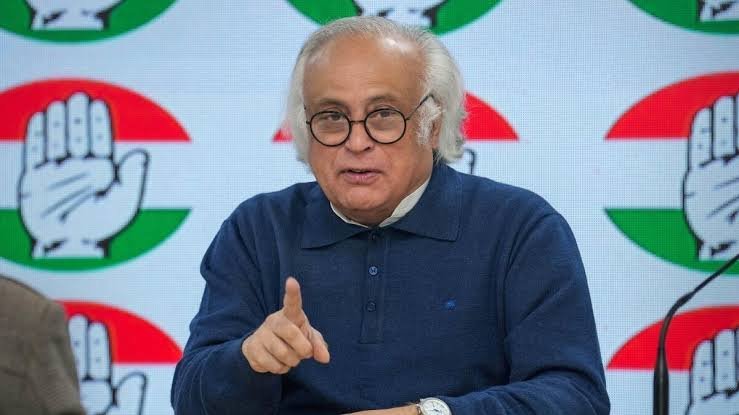
New Delhi, Oct 9: The Congress has criticised Prime Minister Narendra Modi over the latest US government action against major IT companies, including Indian firms, accusing his government of failing to protect Indian professionals and respond firmly to Washington.
Congress general secretary in charge of communications Jairam Ramesh said India had several options to respond to the US measures. However, he alleged that Modi would not take action because his government was under political pressure over the controversy surrounding Chief Election Commissioner Gyanesh Kumar, which the opposition has called “GyaneshGate”.
The Congress also argued that attempts to appease powerful leaders do not always produce favourable results.
Congress Questions Modi Government’s Response to US Visa Crackdown
In a post on X on Friday, Jairam Ramesh criticised the US government’s decision to suspend several major technology and outsourcing companies from the Permanent Labour Certification Programme.
He said the action directly affected Indian IT professionals and questioned the Modi government’s approach towards the United States.
Ramesh also linked the developments to what he described as the government’s efforts to please US President Donald Trump. He claimed that the Modi government had introduced UPI merchant discount rate (MDR) charges that could benefit American companies.
According to the Congress leader, India has options under existing laws, including the Digital Personal Data Protection Act, 2023, and its rules.
However, Ramesh alleged that the Prime Minister would not use these options because of the political pressure surrounding the Gyanesh Kumar controversy.
These remarks represent the Congress party’s political position on the issue. The government has not been shown in the report as having announced a specific retaliatory measure.
US Suspends Major IT Companies From Labour Certification Programme
The US government announced the suspension of several major technology and outsourcing companies from the Permanent Labour Certification Programme, which is used in the process of sponsoring eligible foreign workers for permanent employment.
The companies named in the announcement included Cognizant, Infosys, Tata, Wipro, HCL and Capgemini. Microsoft and Adobe were also suspended, with US officials citing active federal investigations.
The action was announced by US Vice President JD Vance, Labour Secretary Keith Sonderling and Attorney General Todd Blanche as part of an initiative involving the US Anti-Fraud Task Force.
US officials argued that some employers had used the system in ways that disadvantaged American workers.
Labour Secretary Keith Sonderling said the government was suspending several large IT outsourcing companies from the programme.
The suspensions have raised concerns about the potential impact on companies that rely on international recruitment and overseas technology professionals. However, the immediate consequences for individual employees and future applications will depend on the scope and implementation of the measures.
JD Vance Accuses Microsoft of Misusing the System
US Vice President JD Vance specifically criticised Microsoft over its use of employment-based immigration programmes.
Vance claimed that Microsoft had laid off 6,000 American workers in 2025 while continuing to seek foreign workers for certain positions. He also referred to the company’s labour certification applications and H-1B visa petitions.
According to Vance, some applications covered positions similar to those held by American employees who had lost their jobs.
These allegations were presented by US officials as part of the justification for the action. They should be distinguished from independently established findings about individual cases.
The broader dispute highlights the US administration’s focus on protecting domestic employment and reviewing how companies use immigration programmes to recruit skilled workers from abroad.
Why the US Action Matters to Indian IT Professionals
Indian technology professionals form a significant part of the skilled workforce employed in the United States. They are particularly prominent in the technology sector and account for a large share of approved H-1B visa petitions.
The H-1B programme allows eligible US employers to hire foreign professionals for specialised occupations, subject to applicable requirements.
The Permanent Labour Certification Programme serves a different purpose: it is generally part of the employment-based green card process and requires employers to meet relevant labour market requirements.
Therefore, suspension from the labour certification programme should not automatically be interpreted as a blanket cancellation of existing H-1B visas or an immediate ban on all Indian employees working in the United States.
Nevertheless, the latest action could create uncertainty for affected employers and foreign professionals seeking permanent employment-based immigration opportunities.
Indian IT companies with substantial US operations will need to assess the scope of the suspensions and any resulting restrictions on their applications.
US Also Announces Review of J-1 Visa Programme
The US administration also announced an investigation into the J-1 visa programme, which allows foreign nationals to enter the country as exchange visitors for approved activities.
These activities include research, teaching, academic study and specialised professional assignments.
The review reportedly involves programmes used by nine major universities, including Yale, Harvard, Stanford and the California Institute of Technology, commonly known as Caltech.
The move indicates that the administration is examining multiple categories of international employment and exchange programmes, rather than focusing only on technology companies.
Any impact on participating researchers, students and universities will depend on the findings and subsequent decisions by US authorities.
GyaneshGate Adds to Congress’s Attack on Modi
The Congress has used the US visa controversy to renew its criticism of the Modi government, questioning whether India will take a firm position when its professionals and companies face restrictions overseas.
At the same time, the opposition has continued to demand the resignation of Chief Election Commissioner Gyanesh Kumar over alleged irregularities in the Special Intensive Revision (SIR) of electoral rolls.
The government and election authorities’ responses to those allegations are separate from the US immigration action.
By connecting the two issues politically, the Congress has argued that the Prime Minister is facing pressure at home while dealing with developments affecting Indian workers abroad.
The central questions now concern the precise impact of the US suspensions, the next steps available to affected companies and whether the Indian government will announce any formal response.
For Indian IT professionals, the key issue is whether the measures will affect future employment-based green card applications, recruitment plans or other immigration procedures. Further clarification from US authorities and the companies concerned will be important in determining the practical consequences.





