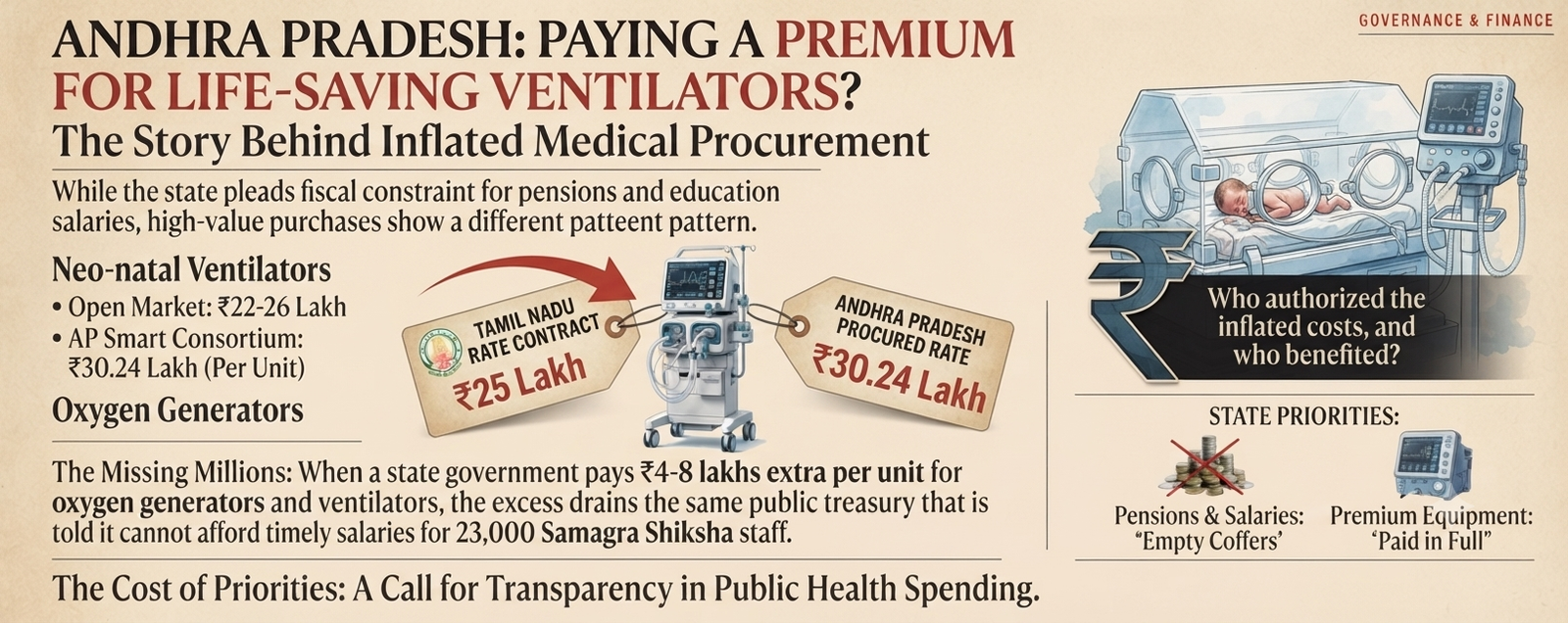
In a state where the government repeatedly claims empty coffers for pensions, farmer relief and unpaid education workers, the Chandrababu Naidu administration has found money for something else: buying life-saving medical equipment at prices that make open-market rates look modest.
Neo-natal ventilators that sell in the open market for ₹22 lakh to a maximum of ₹26 lakh were procured through the AP Smart Consortium at ₹30.24 lakh each. Oxygen generators that should cost far less carried an additional burden of ₹4 lakh to ₹8 lakh per unit. The purchases were routed by changing rate-contract numbers over a two-year period, a detail that raises questions about why the same equipment could not be bought at the rates already listed by other state agencies.
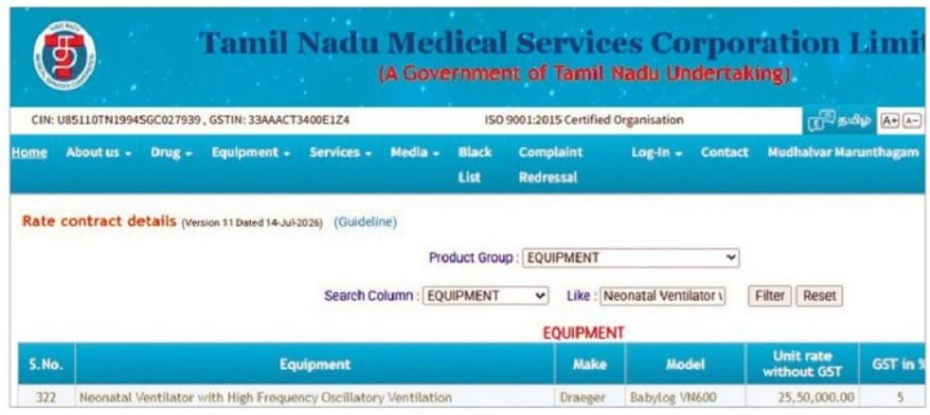
Tamil Nadu’s Medical Services Corporation, whose rate list is publicly available, shows significantly lower prices for comparable high-frequency ventilators and related equipment. The contrast is stark. One state government publishes transparent rates and sticks closer to them. Another appears to have paid a premium for the same category of machines that keep premature babies and critically ill patients alive.
This is not an abstract accounting dispute. These are neonatal ventilators, machines used in the most fragile medical situations. When a government pays several lakhs extra per unit, the excess money comes from the same public treasury that is told it cannot afford timely salaries for 23,000 Samagra Shiksha staff or meaningful intervention when tomato prices collapse. The pattern is becoming familiar: fiscal constraint is invoked for the poor and the working class, while large margins appear in high-value procurement.
Defenders will say that specifications differ, that warranties and service contracts justify higher prices, or that emergency needs leave no time for the lowest tender. Those explanations may contain partial truth. They do not erase the basic questions. Why were rate contracts altered? Why do the final prices sit so far above both open-market quotes and the published rates of a neighboring state’s medical procurement agency? Who authorized the gap, and who benefited from it?
A government that asks citizens to tighten their belts while paying premium rates for ventilators is not merely mismanaging a file. It is revealing its hierarchy of concern. Life-saving equipment should be the last place where inflated costs are tolerated. In Andhra Pradesh under the present administration, it has not been.