A recent WhatsApp status posted by Tiruvuru MLA Kolikapudi Srinivasa Rao has brought renewed public attention to a deeply sensitive social issue in Andhra Pradesh — the growing proximity of liquor outlets and bars to educational institutions, temples, and vulnerable residential communities.
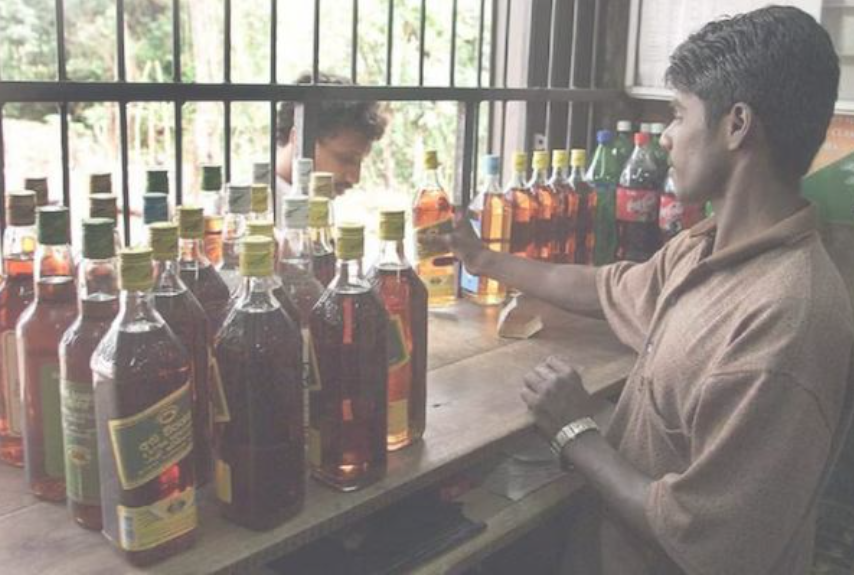
In his message, the Tiruvuru MLA highlighted how liquor shops and bars were allegedly functioning in close proximity to temples and Ambedkar Gurukul institutions, raising serious concerns over the social environment surrounding students and local communities. More strikingly, he alleged that when objections were raised and efforts were made to shut down such establishments, an offer of ₹1.5 lakh was allegedly made as a bribe to allow operations to continue. The allegation has triggered wider debate over the nexus between liquor businesses, political patronage, and regulatory enforcement.
The controversy has become even more politically significant when contrasted with recent developments in neighboring Tamil Nadu. Chief Minister Vijay recently ordered the closure of 717 state-run liquor shops located within 500 metres of temples, schools, and bus stands across the state. The move was projected as part of a broader public welfare and social responsibility initiative aimed at reducing the social impact of alcohol consumption, particularly in sensitive public zones.
The contrast between the two states is now becoming part of a larger political narrative. Critics in Andhra Pradesh argue that while other states are debating regulation and reduction of liquor accessibility near public institutions, the present environment in Andhra Pradesh appears to normalize and even encourage the expansion of alcohol consumption. Allegations frequently surface that ruling party supporters and politically connected individuals are directly or indirectly benefiting from the liquor ecosystem.
For many citizens, the issue goes beyond politics and enters the realm of public health and social responsibility. Parents, teachers, and social activists have repeatedly voiced concerns over liquor outlets operating near schools, hostels, temples, and residential colonies. In rural areas especially, there is growing anxiety about the impact of alcohol accessibility on economically weaker families, youth, and students studying in government welfare institutions.
The debate also revives an older political contradiction in Andhra Pradesh. Successive governments have publicly spoken about women’s welfare, youth empowerment, and social development, yet liquor revenue continues to remain one of the state’s most aggressively pursued income streams. This dependence on excise revenues often creates a conflict between fiscal priorities and social welfare objectives.
Kolikapudi Srinivasa Rao’s remarks have therefore resonated beyond a local controversy. They reflect a broader frustration among sections of society who believe governance should prioritize community well-being over revenue generation and political convenience. The comparison with Tamil Nadu’s recent policy decisions has only intensified questions about whether Andhra Pradesh is moving toward stronger social regulation or deeper normalization of alcohol-driven revenue politics.