Systematic Violence, Political Vendetta, Collapse of rule of Law
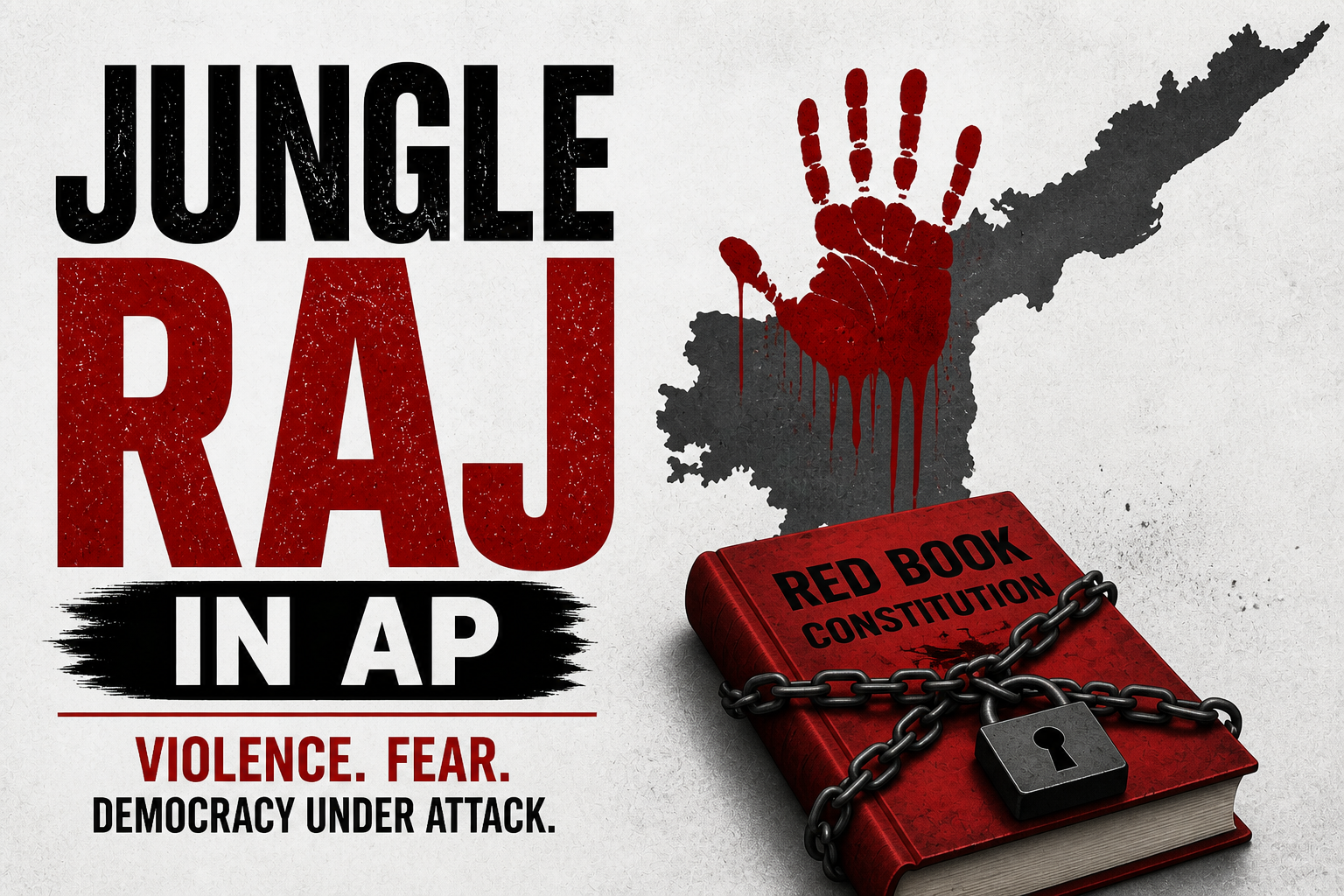
Andhra Pradesh is witnessing a disturbing transformation, from a constitutional democracy into a climate of fear, intimidation, and targeted political violence. What should have been a governance system rooted in the rule of law is increasingly being perceived as one driven by vendetta, coercion, and selective policing. Over the past two years, a clear and consistent pattern has emerged: opposition voices are being silenced, dissent is being criminalised, and violence is being normalised.
A Pattern of Political Violence
The scale of violence is alarming. In just two years, the state has reportedly seen around 710 murders, including 21 political killings, alongside hundreds of attacks on YSRCP leaders, grassroots workers, and supporters.
These are not sporadic law-and-order failures. They reflect a systemic pattern, where individuals associated with the opposition are being targeted through physical attacks, intimidation, and destruction of property.
Rayachoti: A brutal symbol of state failure
The Rayachoti attack stands out as one of the most shocking examples. YSRCP leader and former municipal vice chairman Dasaratha Ramireddy was brutally assaulted with swords and iron rods by a mob allegedly linked to a sitting minister.
What makes this incident more disturbing is the context. The attack occurred after Ramireddy questioned illegal construction on land under court-ordered status quo. He had already approached the police—SP, DSP, and CI—seeking protection. Yet, no preventive action was taken.
Instead, over 100 individuals carried out a coordinated assault, leaving him and others critically injured, vandalising his function hall, and even obstructing emergency medical services.
This was not just an attack on an individual, it was an attack on rule of law itself.
From Rayachoti to Statewide Violence: A Recurring Template
The Rayachoti incident is part of a broader trend:
- In Vinukonda, a YSRCP worker, Rashid, was brutally murdered in broad daylight.
- In Guntur, former minister Ambati Rambabu’s house and office were attacked and set on fire by political mobs.
- In Ibrahimpatnam, the residence of former minister Jogi Ramesh was targeted with petrol bombs.
- In Pulivendula, YSRCP leaders were attacked with iron rods during local political tensions.
- In multiple districts, Dalits and vulnerable communities have faced extreme violence, including fatal assaults.
These incidents collectively reveal a repeatable pattern:
complaint → no police response → organised attack → delayed or selective action.
Selective Policing and Institutional breakdown
One of the most troubling aspects is the role of law enforcement.
- Victims report filing complaints in advance, yet no preventive measures are taken.
- In several cases, attacks occur in the presence of police or despite prior alerts.
- Meanwhile, opposition leaders, journalists, and social media voices face multiple FIRs, arrests, and harassment for expression or criticism.
This duality, inaction in violence, overaction in dissent—points to a serious erosion of institutional neutrality.
“Red Book Governance”: A Parallel System Over Constitution
Critics have increasingly described the current situation as the rise of a “Red Book governance model”—where political considerations override constitutional principles.
Under this framework:
- Law enforcement appears to act selectively
- Political opponents are treated as targets
- Democratic dissent is equated with criminality
The result is a chilling effect across society, where fear replaces free expression and accountability.
Democracy under strain
What is unfolding in Andhra Pradesh is not merely a political conflict—it is a structural challenge to democratic functioning.
When:
- Violence becomes a tool of political messaging
- Institutions fail to act impartially
- Citizens lose faith in protection mechanisms
The very foundation of democracy begins to weaken.
Conclusion
The cumulative evidence, from Rayachoti to multiple districts, suggests that Andhra Pradesh is facing a deep governance crisis. The issue is no longer about isolated incidents, but about a pattern of systemic failure where violence, intimidation, and selective enforcement are becoming embedded in the political ecosystem.
Restoring trust will require more than administrative corrections, it demands a return to constitutional values, institutional accountability, and equal protection under law.