Prime Minister Narendra Modi has repeatedly called on Chief Ministers and public officials to practice austerity — to cut wasteful expenditure, prioritise fiscal discipline, and remember that every rupee of government money belongs to the taxpayer. It is advice that Chandrababu Naidu, Chief Minister of Andhra Pradesh, has apparently chosen not to apply to himself.
A detailed list of government-sanctioned expenditures paints a portrait of a Chief Minister who lives, travels, and governs at a scale of personal comfort that would be extraordinary in any state, but is nothing short of scandalous in one that is drowning in debt, unable to pay its contractors, unable to clear panchayat arrears, and unable to fund basic child welfare.
As AP Drowns in Debt, the CM’s Expenditure List Tells a Different Story
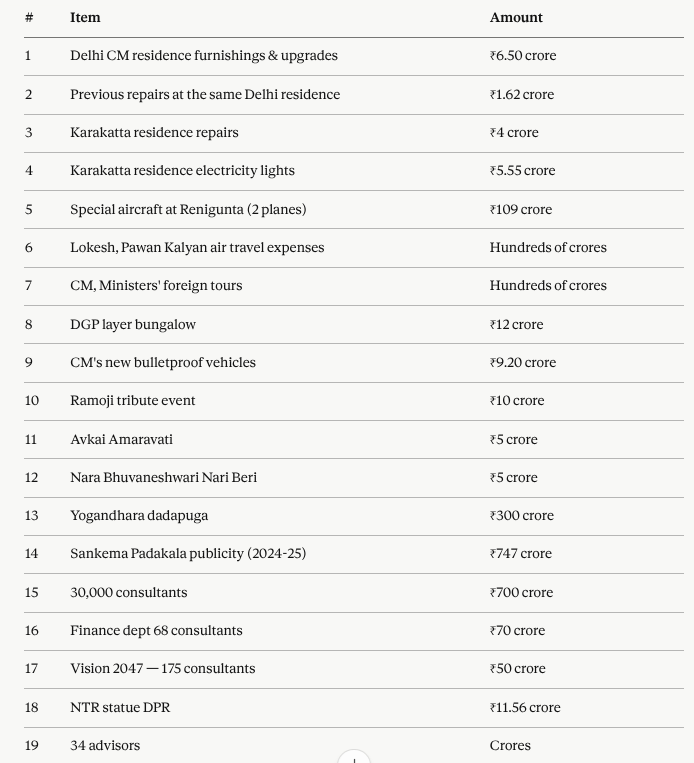
The full list of state-funded expenditures, as compiled from official records and the image circulating from verified sources, runs as follows :
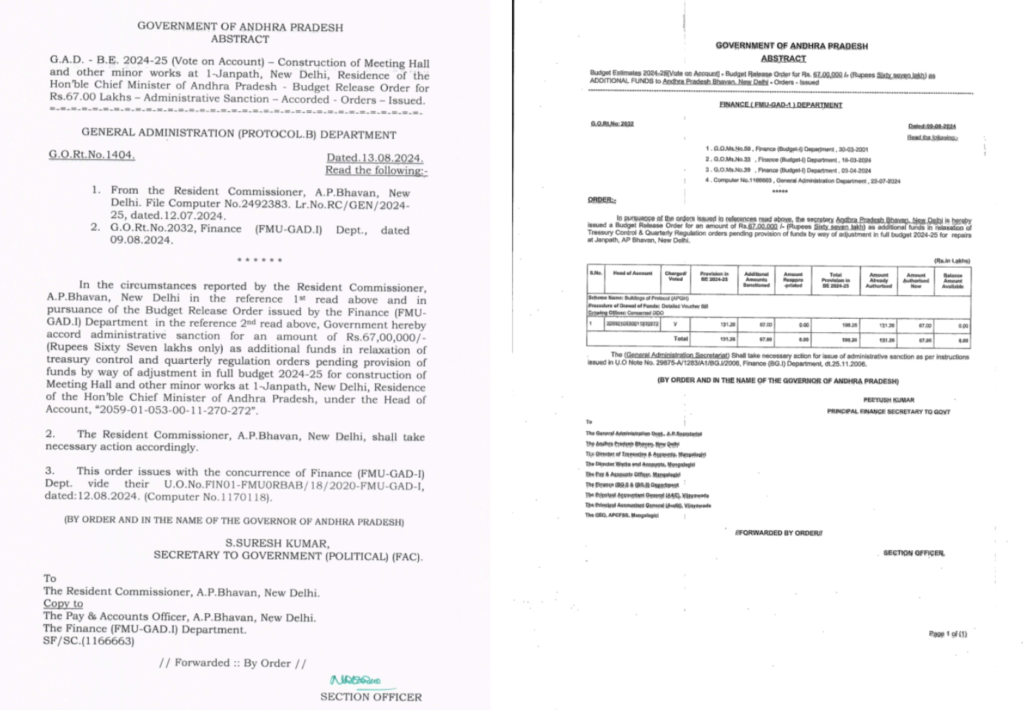
The AP government released a Government Order (G.O.Rt.No.1404) sanctioning ₹67 lakh for the construction of a meeting hall and minor works at CM Chandrababu Naidu’s Delhi residence at Janpath, New Delhi. This followed an earlier GO (G.O.Rt.No.2032) sanctioning ₹95 lakh for repairs and facility upgrades at the same residence, bringing the total Delhi residence expenditure to ₹1.62 crore.
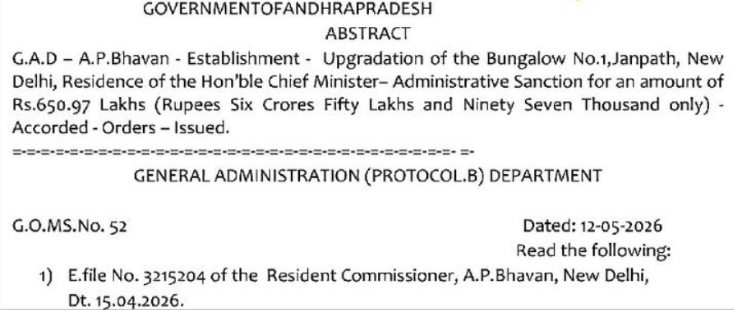
GO sanctioning 6.5 Crores towards the Delhi Residence.
The total visible in these figures — even setting aside the items listed simply as “hundreds of crores” or “crores” — runs well past ₹2,000 crore. This is not a budget. It is a lifestyle, funded by the people of a state that cannot keep its village lights on.
Austerity for the Poor, Luxury for the Powerful
Andhra Pradesh is not a wealthy state. It carries one of the highest per capita debt burdens among India’s major states. The State Finance Commission has warned that panchayat electricity arrears will reach ₹4,000 crore by December 2025. Rural Water Supply contractors are owed ₹1,050 crore for work already completed. Small panchayats with populations under 1,000 are being crushed under electricity bills they cannot pay for drinking water and street lighting a burden the state refused to absorb at a cost of just ₹35 crore per year.
Against this backdrop, the sanctioning of ₹6.50 crore to furnish and upgrade a Delhi bungalow — a residence the Chief Minister uses for visits to the national capital, not his primary home is not merely a financial question. It is a moral one. It tells the people of Andhra Pradesh that the state has money, but chooses to spend it on the comfort of its Chief Minister rather than the survival of its villages.
Official sources defend the expenditure as necessary for governmental purposes, but opposition parties and public commentators have questioned whether public funds are being used for luxury facilities, with the issue becoming a major political controversy.
The Consultant Economy: ₹820 Crore for Advice
Perhaps nothing in this list better captures the TDP government’s philosophy than its approach to consultants. According to the compiled records, the state has engaged 30,000 consultants at a cost of ₹700 crore, 68 Finance Department consultants at ₹70 crore, and 175 Vision 2047 consultants at ₹50 crore a total of over ₹820 crore on advisory services alone.
₹820 crore on consultants. In a state with an efficient IAS cadre, experienced technical departments, and universities full of economists and planners. In a state that cannot pay its RWS contractors ₹1,050 crore for completed work. The consultants are paid. The contractors are not.
The pattern is consistent throughout: money flows toward the visible, the elite-facing, and the politically connected. It is withheld from the invisible — the village, the contractor, the child in the SC colony, the panchayat that cannot keep its lights on.
The Modi Contradiction
Modi’s austerity message was not a suggestion. It was a directive to Chief Ministers governing states on Central transfers and borrowed funds. Andhra Pradesh receives significant central assistance. Its fiscal position depends substantially on Union government support, special category status arguments, and borrowed capital. Every rupee spent on Delhi bungalow furnishings, bulletproof vehicles, and government publicity is a rupee that was either borrowed adding to the debt the next generation must repay, or diverted from a welfare scheme that a poor family needed.
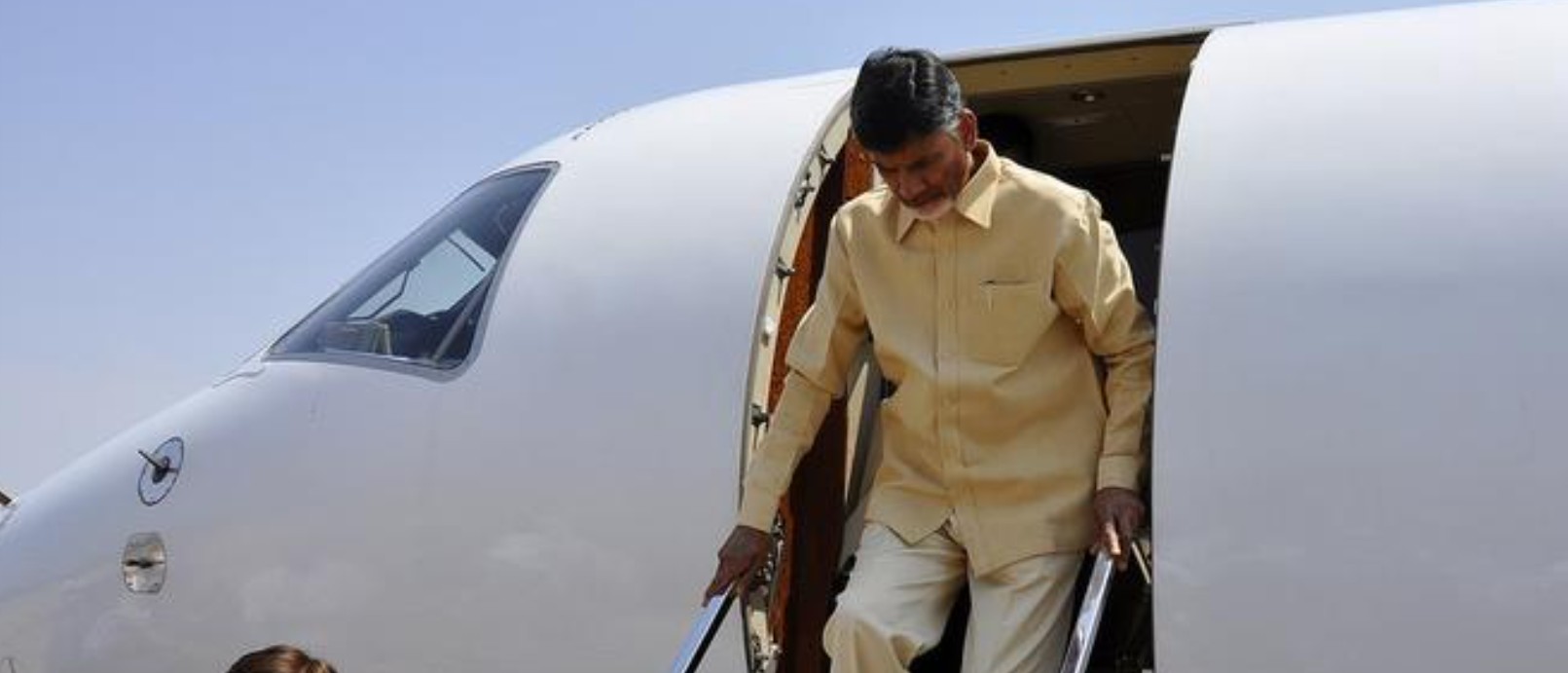
Chandrababu Naidu is a Chief Minister who calls himself a visionary, who speaks at Davos and World Economic Forums about building a new Andhra Pradesh. But the vision being built with public money is increasingly a vision of personal grandeur: a furnished Delhi home, special aircraft, hundreds of crores in government publicity for schemes named after the ruling family, and an army of consultants to advise on a future that the state’s poorest residents will not live to see. The Prime Minister said spend less. The Chief Minister spent ₹6.50 crore on his Delhi home.