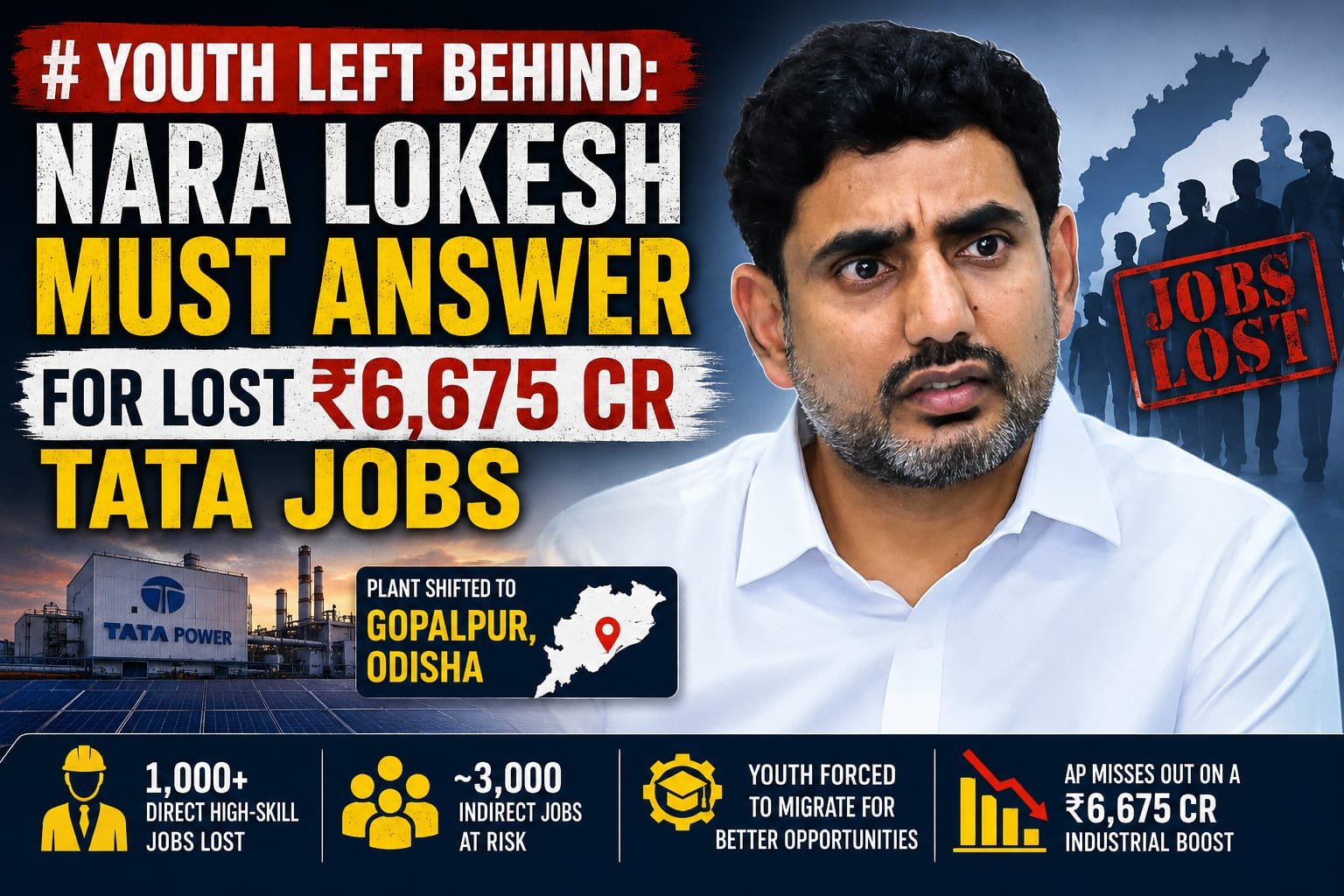
The recent decision by Tata Power to establish its landmark ₹6,675 crore solar ingot and wafer manufacturing facility in Gopalpur, Odisha, represents more than a financial shift—it is a direct blow to the employment aspirations of Andhra Pradesh’s youth.
IT and HRD Minister Nara Lokesh, who frequently promises high-tech employment and rapid industrial growth, faces critical accountability regarding why high-paying manufacturing jobs are leaving the state.
1. The Cost of Missed Opportunities for AP Youth
Manufacturing units for high-tech components like solar ingots and wafers create a high-value industrial ecosystem. The decision by Tata Power to invest outside the state deprives local engineering graduates and skilled workers of critical employment avenues.
| Impact Dimension | Potential Benefits Promised | Reality After Industrial Shift |
|---|---|---|
| Direct High-Skill Employment | 1,000+ specialized engineering & manufacturing roles | Opportunity lost to Gopalpur, Odisha |
| Indirect Job Creation | ~3,000 supply chain, construction, & service jobs | Regional vendor ecosystem stalled |
| Skill Ecosystem Development | Advanced solar technology training for local ITIs & polytechnics | Youth forced to migrate for industrial employment |
| Regional Manufacturing Base | Conversion of AP into a clean-tech hub | Reliance on assembly units rather than core manufacturing |
2. Policy Promises vs. On-Ground Execution
The state’s youth were assured that plug-and-play industrial corridors, world-class infrastructure, and immediate clearance frameworks would retain major corporate investments. However, core operational factors led Tata Power to select Odisha, as highlighted by reporting from Economic Times Energy World.
| Expectations Set by HRD/IT Ministry | Structural Reality Influencing Investor Decision | Youth Aspiration Impact |
|---|---|---|
| Immediate Employment Creation | Long land-handover timelines and delayed site readiness | Prolonged wait time for core engineering jobs |
| Competitive Power Subsidies | High energy tariffs and prolonged duty structure negotiations | Loss of heavy manufacturing projects to neighboring states |
| Plug-and-Play Infrastructure | Slower administrative approvals compared to Odisha’s SEZ model | Disconnect between policy marketing and ground execution |
3. Financial Capacity of Lost Investor
Tata Power’s strong balance sheet underscores the scale of the long-term industrial anchor Andhra Pradesh missed out on, as reflected in corporate financial reports covered by Angel One Financial Services.
| Corporate Financial Metric (Q1 FY27) | Recorded Performance | Impact on State Youth |
|---|---|---|
| Consolidated Net Profit (PAT) | ₹1,401 Crore (▲ 11.0% YoY) | Missed partnership with a highly stable employer |
| Consolidated Revenue | ₹19,051 Crore (▲ 5.6% YoY) | Local tax revenues unavailable for youth skill programs |
| Cell & Module Capacity | 4.3 GW (100% Operational) | Loss of exposure to industry-leading production standards |
The Need for Transparent Answers
Young job-seekers across Andhra Pradesh require concrete employment roadmaps rather than ceremonial announcements. Minister Nara Lokesh must clarify what policy adjustments will be enacted to prevent future flagship manufacturing projects—and the thousands of jobs tied to them—from migrating to competing states.