AP reels under Fuel Price shock as costs Spiral under Naidu’s rule
Andhra Pradesh is facing one of its worst fuel-price crises in recent years. Petrol, diesel, LPG, and CNG prices have surged under the Chandrababu Naidu-led coalition government, pushing lakhs of middle-class and poor families into deep financial distress. What was once projected as a government that would “reduce the burden on the people” has instead become a regime under which fuel prices, transportation costs, and essential commodities are spiralling out of control.
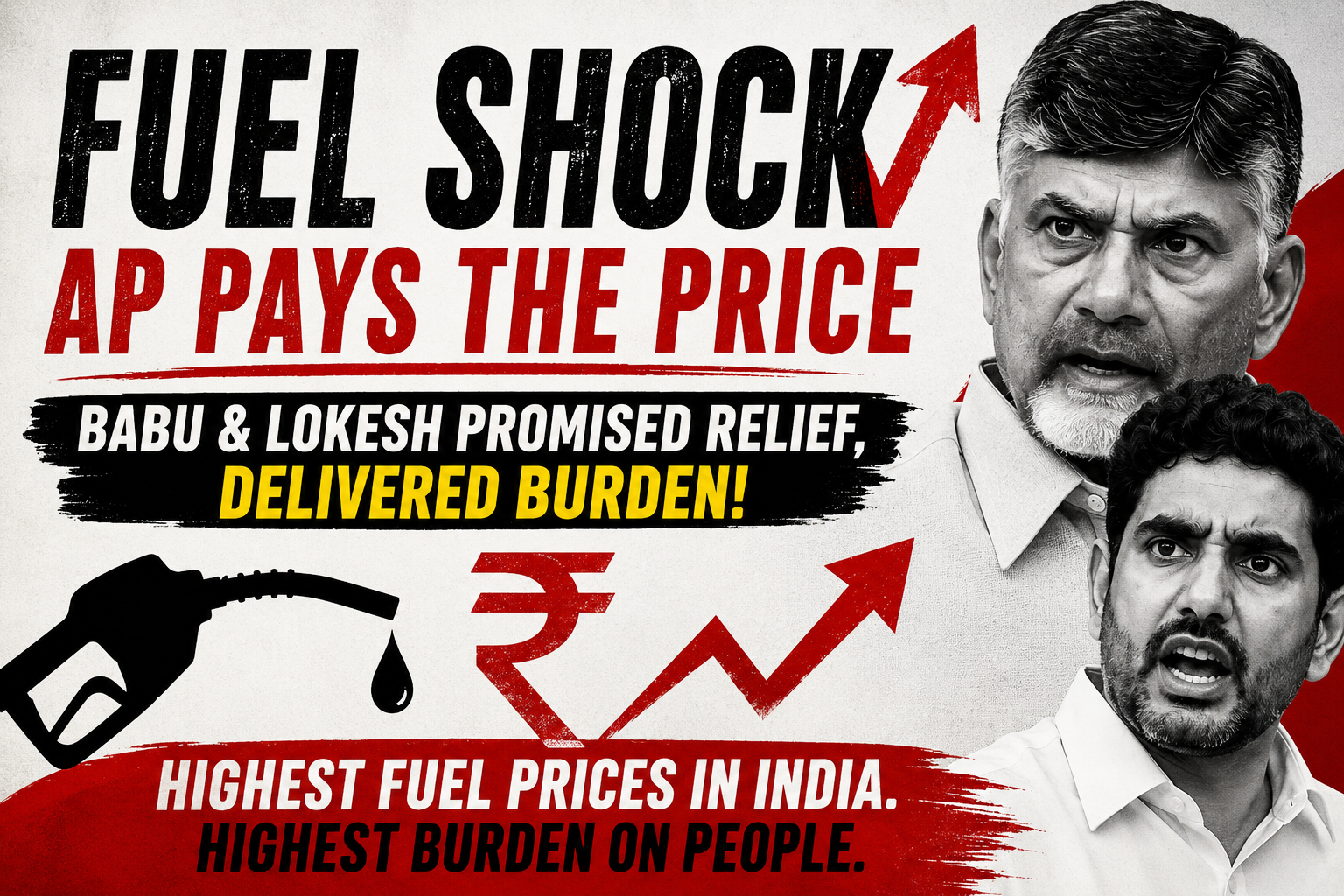
With the latest hike of nearly Rs. 3 per litre by the Central government, Andhra Pradesh now has some of the highest fuel prices in the country. Petrol prices have crossed Rs.113 per litre, while diesel has gone beyond Rs.101. The impact is visible everywhere, from rising bus fares and transport charges to inflated prices of vegetables, groceries, milk, and daily essentials. For ordinary households already struggling with stagnant incomes, the fuel burden has become unbearable.
The Politics of Petrol Bunk Selfies
What makes the current situation politically explosive is the sharp contrast between the coalition’s promises before elections and its conduct after assuming power.
During the YSRCP government, Chandrababu Naidu, Nara Lokesh, and TDP leaders repeatedly staged protests at petrol bunks near the Andhra Pradesh–Karnataka border. They conducted media events, posed for selfies, and accused the then government of “looting the people” through fuel taxes. Nara Lokesh even promised during his padayatra that a TDP government would reduce VAT and additional taxes on petrol and diesel. Two years later, those promises have vanished. VAT remains high. Additional cess continues. Andhra Pradesh has become costlier than neighbouring states, with petrol prices nearly Rs.9 higher than Tamil Nadu. The same leaders who once weaponised fuel prices for political mileage are now silent while people bear the burden daily. The obvious question being asked by the public is simple: if “Baadude Baadudu” was the slogan then, what should people call the situation now?
Artificial shortages and Administrative Failure
The crisis has not been limited to price hikes alone. In recent months, several districts in Andhra Pradesh witnessed severe petrol and diesel shortages, with fuel stations running dry for days together. Commuters, transport operators, farmers, and small businesses were pushed into chaos. Serious allegations emerged that fuel stocks were diverted towards Amaravati-related contractor operations, creating an artificial scarcity across the state. The controversy intensified after communication between the state and Centre reportedly exposed concerns over fuel management and reserve handling.
Only after widespread public anger and opposition protests did the government move to stabilise supplies. For a state already suffering from inflation, even temporary fuel shortages created panic and disrupted everyday life.
Rising Fuel Costs, Rising Cost of Living
Fuel prices are not an isolated issue. Every increase directly impacts household budgets. Commercial LPG prices have risen sharply. Domestic gas cylinder rates continue to climb. CNG prices have also gone up. Oil agencies are warning that fuel prices may increase even further in the coming months. The consequences are visible across sectors. Transporters are increasing charges. Small traders are passing on costs to consumers. Farmers are struggling with higher operational expenses. Hotels, tea stalls, delivery services, and small businesses are all facing rising input costs. Ultimately, the burden falls on the common citizen.
Yet despite being a key ally in the BJP-led Central government, Chandrababu Naidu has failed to exert visible pressure on the Centre for relief. Critics argue that even at the state level, the government could immediately reduce VAT and road cess to provide some breathing space to consumers. Instead, taxes remain untouched while people continue paying among the highest fuel prices in India.
Austerity for the Public, Luxury for the Leadership
Another criticism haunting the coalition government is the perception of double standards. While ministers advise citizens to “save fuel,” the ruling leadership continues to travel extensively using special flights and helicopters. Massive political events are being organised with elaborate convoys, police deployments, RTC buses, and private school buses for mobilisation. Routine government programmes, including pension distribution events, are increasingly being turned into publicity spectacles involving large-scale expenditure. For many citizens, the contradiction is glaring: ordinary people are being told to cut expenses while the political leadership continues with extravagant public spending and image-management exercises.
The Unanswered Question on AP’s Fuel Wealth
The debate has also revived larger questions about Andhra Pradesh’s share in national fuel revenues. The Godavari basin’s D-6 block is among the country’s most significant gas and petroleum-producing regions. Massive quantities of fuel extracted from Andhra Pradesh are supplied across India. Yet the state continues to receive little visible benefit in terms of price relief or revenue-sharing. Critics argue that successive recommendations regarding revenue allocation from petroleum resources have been ignored. They question why the state leadership — despite political proximity to the Centre — has failed to aggressively demand Andhra Pradesh’s rightful share.
A Crisis of Credibility
Fuel prices are no longer just an economic issue in Andhra Pradesh. They have become a political symbol of broken promises and governance contradictions. The coalition government that once built an aggressive political campaign around rising fuel prices now finds itself defending the very burden it once condemned. The contrast between pre-election rhetoric and post-election governance has become impossible to ignore. For lakhs of families struggling to manage daily expenses, the issue is no longer about political slogans or media campaigns. It is about survival in a state where every fuel hike is now pushing the cost of living further out of reach.