The backbone of Andhra Pradesh has always been its agricultural sector, a domain that directly and indirectly sustains nearly 62 percent of the state’s population. In recent times, however, the state’s agricultural policy has shifted from one of compassionate, grassroots empowerment to a system of rigid, exclusionary bureaucratization.
Today, our farming community faces a multi-front crisis. A combination of severe climatic vulnerabilities, erratic institutional support, and an ill-conceived digital push has left real cultivators stranded. While high-sounding advertisements speak of technological modernization, the reality on the ground is a heartbreaking tale of neglected fields, missing subsidies, and administrative betrayal.
The ‘Digital’ Blow: Exposing the Fallacy of the APAIMS 2.0 Fertilizer Rollout
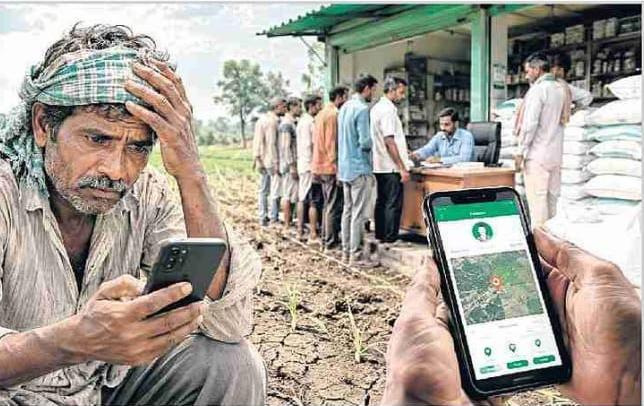
At the onset of the current Kharif season, the administration proudly unveiled its latest digital intervention,the APAIMS 2.0 mobile application, designed to handle the exclusive sale and distribution of subsidized Urea and Di-Ammonium Phosphate (DAP) fertilizers across the state’s 26 districts. Promoted as a tool for transparency, this application has instead triggered widespread chaos and panic across rural communities.
The core failure of this app lies in its rigid technical parameters, which completely disconnect digital data from ground realities:
- The Webland Trap: The app automatically links fertilizer eligibility directly to centralized land records through the Andhra Pradesh Webland System.
- The Tenant Farmer Exclusion: In Andhra Pradesh, tenant farmers make up more than 60 percent of the actual cultivating workforce. Because these lands remain officially registered under the names of the original landowners, the app automatically allocates the subsidized digital coupons to the landlords on paper, completely denying subsidized inputs to the actual tenant who invests the sweat and capital.
- Arbitrary Caps on Sowing Needs: The system has imposed a blanket limit of a maximum of 50 bags of fertilizer per farmer per season. For joint or undivided families managing large, contiguous blocks of land under a single land title document, this arbitrary number does not even cover a fraction of their actual crop requirements.
- Infrastructure Collapse: In rural areas, constant server outages, network connectivity drops, and biometric fingerprint mismatch errors mean that farmers are forced to spend days running between Village Secretariats and private dealers just to secure a token.
The Shadow of the Black Market: By effectively shutting out genuine cultivators from subsidized channels, the current administration has inadvertently revitalized the exploitative broker network. Desperate to save their standing crops from starving, tenant farmers are forced into the open black market, paying hundreds of rupees extra per bag to private traders.
Drought, Neglect, and Broken Safety Nets
The digital mismanagement of fertilizers is only a symptom of a much deeper institutional apathy toward disaster relief. Over successive cropping cycles, Andhra Pradesh has been hit hard by extreme weather variations, ranging from unseasonal cyclones to prolonged dry spells.
Instead of stepping forward with robust, state-backed compensation, the current administration has chosen to look away:
- Manipulated Drought Declarations: In a blatant cost-cutting exercise, the government declared a mere 37 mandals as drought-hit during a previous season, followed by an equally restrictive 51 mandals in the subsequent cycle. By drawing these tight, unrealistic boundaries, hundreds of thousands of impacted farmers across non-declared regions were stripped of their right to financial relief.
- The Deconstruction of Free Crop Insurance: The comprehensive, state-funded free crop insurance model that once gave smallholders peace of mind has been heavily compromised. In its place, voluntary, diluted alternative programs have been introduced, leading to a situation where not a single rupee of insurance compensation has reached struggling farmers over the last three years.
- The Vanishing Input Subsidies: Essential zero-interest loan programs (“Sunna Vaddi”) and direct input subsidies for purchasing seeds and equipment have been frozen, with massive backlogs of unpaid funds accumulated at the state level.
Squeezing out the Smallholders: A Quantitative Look at Neglect
The scale of the current agrarian distress is clearly visible when examining the complete stoppage of state support across key regions:
| Welfare/Input Category | Current State of Implementation | Economic Impact on Cultivators |
|---|---|---|
| Groundnut Seed Distribution | Promised subsidies on critical groundnut seeds for the Rayalaseema region were completely withheld, missing the critical early-June sowing window. | Farmers were forced to purchase low-quality, unverified private seeds at exorbitant rates, risking crop failure. |
| Green Manure (Pachirotta) Seeds | The state-subsidized distribution of soil-enriching green manure seeds was cancelled. Government stores began selling these seeds at standard open-market prices. | Smallholders were unable to afford basic organic soil rejuvenation, leading to long-term soil degradation. |
| Tenant Identification (CCRC) | The mandatory annual process of issuing identification cards under the Andhra Pradesh Crop Cultivator Rights Act to validate tenant identities has been completely paused by the administration since April. | Without official CCRC recognition, tenant farmers are legally blocked from accessing commercial bank loans or selling at government Mandis. |
Driving Farmers Into the Debt Trap
When institutional banking networks close their doors due to a lack of state-backed crop registration and clear credit guidelines, farmers do not stop cultivating; they simply turn to more dangerous options.
Unable to secure standard crop loans due to the state’s failure to publish clear annual credit plans, smallholders and tenant farmers are increasingly forced into the hands of private moneylenders. These local syndicates charge predatory interest rates ranging anywhere from 24 percent to 36 percent.
With input costs climbing rapidly, zero support from state insurance, and a total lack of minimum support price enforcement at grassroots procurement centers, the arithmetic of farming has turned completely hostile. For many, the weight of this accumulated debt is proving unbearable, quietly pushing our rural heartlands back into a dark era of extreme distress and structural insolvency.
The current administration must realize that governance cannot be run purely on algorithms and cost-cutting templates. If immediate corrections are not made including the unconditional issuance of tenant credit cards, the removal of digital hurdles on fertilizer access, and the immediate release of delayed input subsidies Andhra Pradesh’s agricultural sector faces an institutional collapse from which it may take decades to recover.