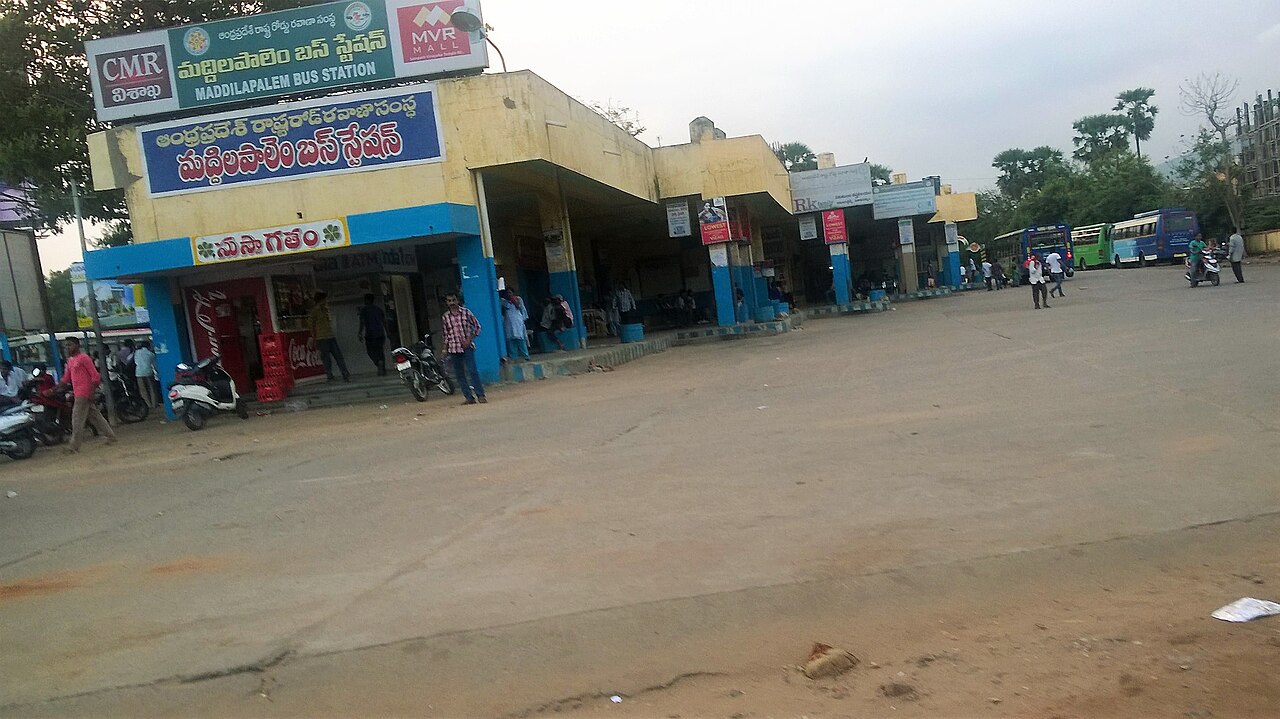
The lifeblood of public transport in Andhra Pradesh is facing an existential crisis. Under the guise of modernization and “Public-Private Partnerships” (PPP), an aggressive blueprint is being executed to systematically dismantle and hand over prime public assets to corporate entities.
The state’s road transport infrastructure, which serves over 50,000 employees and millions of daily commuters, is being aggressively pushed toward backdoor privatization. This deliberate policy shift threatens to leave the public transport corporation financially crippled while enriching a select few private syndicates.
The Real Estate Loot: Underpricing Prime Assets
A critical examination of recent administrative actions reveals an alarming pattern. Valuable, centrally located lands—which are the literal lifelines for bus depots and stations—are being systematically undervalued to benefit private entities.
The financial mechanics of these proposed transactions defy economic logic:
| Bus Station / Location | Real Market Value (Estimated) | Proposed Private Capital Investment | Lease Term | Proposed Model / Extent | Target Cities for Land Alienation |
|---|---|---|---|---|---|
| Visakhapatnam Maddilapalem | ₹2,400 Crore | ₹500 Crore | 99 Years | 12 Acres under PPP | Kurnool |
| Tirupati Intermodal Station | Prime Temple-Town Hub | ₹300 Crore | Long-term Lease | Exploitation of Assets | Anantapur |
| Vijayawada Autonagar | Highly Commercial Belt | ₹150 Crore | Long-term Lease | Exploitation of Assets | Kadapa |
| Guntur Bus Station | Central Transit Core | ₹60 Crore | Long-term Lease | Exploitation of Assets | Ongole |
| Other Targeted Hubs | Multi-Crore Transit Lands | Private Capital Influx | Long-term Lease | Systematic Privatization | Rajamahendravaram, Eluru |
The disparity highlighted in the ongoing asset assessments is shocking. In Visakhapatnam’s Maddilapalem, 12 acres of prime land valued at more than ₹200 crore per acre (totaling over ₹2,400 crore) is being surrendered to a private company in exchange for a meager ₹500 crore project investment. To make matters worse, these arrangements are being structured as 99-year leases, which effectively amounts to a permanent handover of public property.
Beyond these major hubs, a master plan is already underway to alienate critical transit lands across Kurnool, Anantapur, Kadapa, Ongole, Rajamahendravaram, and Eluru. In total, land parcels worth over ₹5,000 crore are being prepared for a fire sale to private entities.
Undermining Financial Self-Sufficiency
The justification presented for these PPP models is the mobilization of investment without burdening the state exchequer. However, history proves that the corporation is entirely capable of upgrading its own infrastructure.
Between 2015 and 2016, major renovations—including the flagship Vijayawada bus station—were successfully executed using internal resources and direct oversight. The commercial revenues generated from those upgrades flowed directly into the public exchequer. Under the current regime’s PPP framework, the vast majority of lucrative commercial revenue from shops, complexes, and advertisement rights will be siphoned into private pockets, leaving the public sector with a nominal fraction.
Furthermore, the sudden rush to award electric bus tenders to private operators rather than directly empowering the corporation to procure its own fleet has triggered massive unrest. By opting for wet-lease and private operation models, the current administration is intentionally turning a proud public utility into a dependent entity that owns neither its operational fleet nor its land assets.
Employee and Public Backlash
The Joint Action Committee (JAC) and various state transport employee unions have hit the streets in protest. The workforce clearly sees through the strategy: starve the corporation of direct capital funding, allow infrastructure to appear neglected, use that neglect to justify private intervention, and ultimately liquidate public assets.
The core demands and grievances from the ground emphasize a total rejection of the current administrative direction:
| Core Grievance | Union Demand | Expected Outcome |
|---|---|---|
| Predatory 99-Year Leases | Immediate cancellation of all PPP land handovers | Retention of public land ownership |
| Infrastructure Neglect | Direct allocation of state funds for modernization | Commercial revenues remain in public exchequer |
| Fleet Privatization | Scrapping of private operator contracts for electric vehicles | Direct capital expenditure procurement of buses |
Public infrastructure must serve the citizens, not act as a real estate clearinghouse for favored corporate entities. Handing over lands worth thousands of crores for a fraction of their value under the guise of “development” is a policy disaster that will severely hurt the state’s economic sovereignty and the common man’s mobility for decades to come.
For a closer look at how public transport employees and unions are rallying across the state against these hostile policy shifts, you can watch this coverage on the APSRTC Union Protest, which highlights the growing friction between the administration and the workforce over the introduction of privately managed transit frameworks.