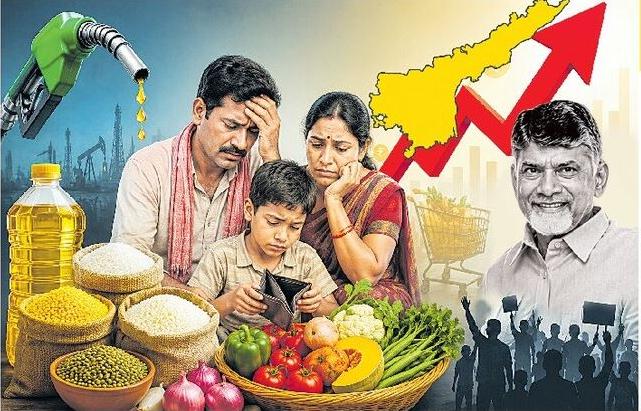
While macroeconomic statistics dominate state policy debates, a much harsher reality is playing out across the kitchen tables of the common people. A sharp, compounding rise in the costs of essential commodities, driven heavily by spiking fuel and energy rates has left the middle and lower-income families reeling under unprecedented financial pressure. What was once a manageable monthly budget has rapidly transformed into a daily struggle for basic sustenance.
The Kitchen Budget Fractures
For an ordinary household, the most visceral impact of this inflation is felt in the market. Retail prices for daily necessities have climbed aggressively compared to previous seasons. Essential cooking oils, basic vegetables, and staples like rice and pulses have seen steep hikes, making a balanced meal increasingly difficult to afford.
Data from regional market surveys paints a stark picture of the current retail landscape:
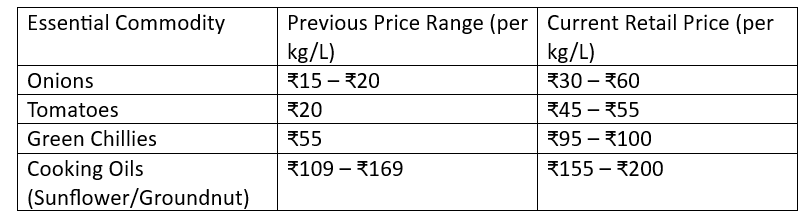
This sudden surge isn’t seasonal; it is a direct consequence of soaring transportation costs. As diesel and commercial fuel prices climb, the hidden transport tax hits every single vegetable and grain moved into urban hubs. Everyday food lovers and families are feeling the heavy squeeze as staples and essential food item prices skyrocket suddenly across retail markets.
The Compounding Domestic Energy Crunch
Adding fuel to the fire is the critical situation surrounding domestic energy. The price of a domestic LPG cylinder has risen substantially, hovering tightly between ₹950 and ₹980 across various districts. For small families and daily wage earners, these numbers are not just statistics—they represent a breaking point.
“Every single essential item, from oil to basic greens, has doubled in price,” shared a homemaker from the NTR district. “When the price of domestic gas and petrol goes up daily, running a household becomes an agonizing mathematical puzzle. We are cutting down on nutrition just to keep the stove burning.”
Public frustration is further mounting due to perceived administrative inaction. Citizens express profound disappointment that pre-election assurances regarding fuel price caps and subsidized welfare schemes have given way to severe price hikes. This sentiment has triggered intense debate, with the public actively calling out political turnarounds as everyday citizens lash out over rising petrol and diesel price burdens.
A Call for Prompt Intervention
The current economic stress has triggered widespread concern from civil society and consumer advocacy groups. Public consensus demands immediate, concrete measures to alleviate the burden on the common citizen:
Strict regulation of fuel surcharges to halt the cascading effect on food transport.
Immediate stabilization of subsidized commodity distribution channels for low-income groups.
Increased transparency in pricing mechanisms to curb artificial market hoarding.
A thriving society cannot be measured solely by infrastructural milestones if its people are struggling to afford a basic plate of food. It is crucial for governing authorities to step away from bureaucratic oversight, listen to the grievances of ordinary households, and implement immediate relief measures to ease the heavy burden on everyday life.