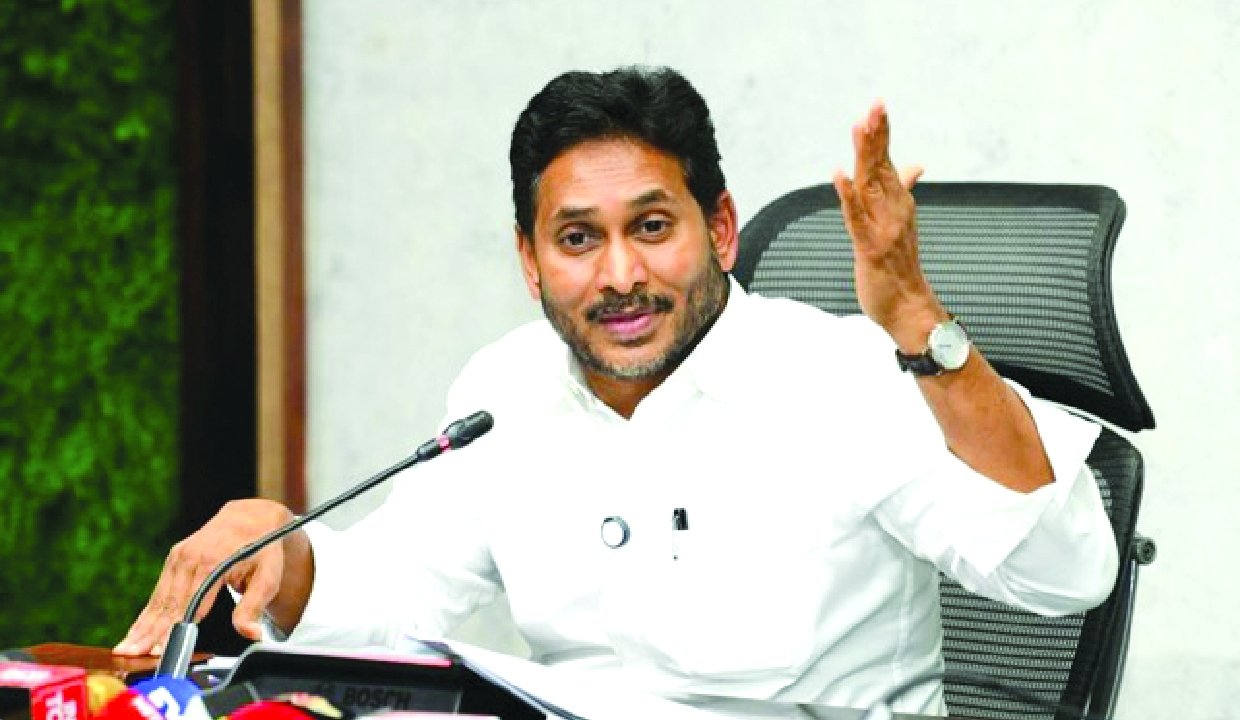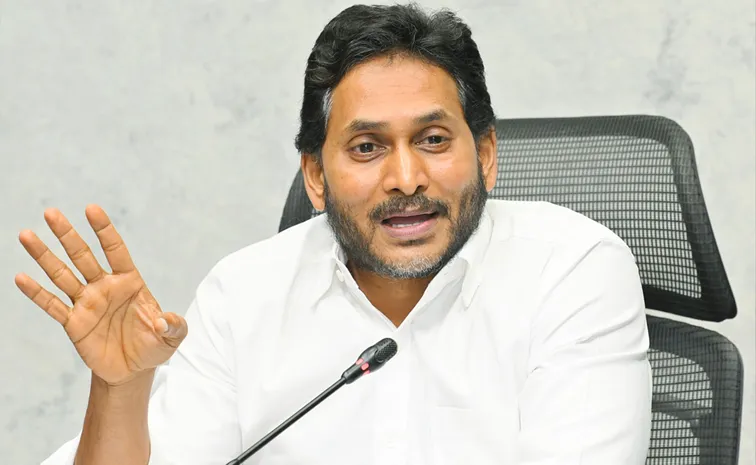
The political landscape is witnessing a stark betrayal of the public trust. In a scathing indictment of the current administration, YSRCP chief YS Jagan Mohan Reddy has called out Chief Minister Chandrababu Naidu for systematically dismantling the welfare architecture built for the poor, farmers, and government employees. What was promised as progress has instead resulted in a massive “backstabbing” (Vennupotu) of the common man through severe budget cuts, delayed payments, and frozen welfare schemes.
The Fuel Tax Reality Check
For years, the opposition-led rhetoric centered around reducing the burden of fuel prices on the common man. Yet, looking closely at the actual administrative trajectory reveals a contradictory reality.
Back in February 2015, the Value Added Tax (VAT) on petrol was adjusted to 31% plus Rs. 4 per liter, and diesel was pegged at 22.25% plus Rs. 4 per liter. While global crude prices fluctuated, local taxation remained aggressively high. When the pandemic hit in 2020, rather than offering a cushion to a struggling populace, a specialized road development cess of Rs. 1 per liter was added to both fuels.
Today, the promised relief remains a mirage. While the current administration claimed they would stabilize the economy without burdening the consumer, data tracking fuel price tax structures proves that energy revenues remain the state’s preferred tool, directly impacting the cost of essential commodities and transport for ordinary citizens.
Where Are the Amma Vodi and Welfare Dues?
Perhaps the most glaring gap between rhetoric and reality lies in the education and social welfare sectors. The flagship Amma Vodi scheme, designed to incentivize schooling by financially empowering mothers, has seen massive stagnation. Millions of mothers across the state are now left asking a simple question: Where is the financial assistance promised for our children’s future?
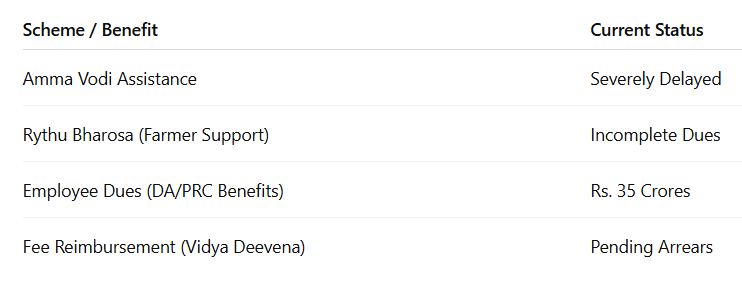
Furthermore, the Vidya Deevena and Vasathi Deevena programs—which previously ensured that higher education was completely free for marginalized students—are currently plagued by massive arrears. When the state delays releasing funds directly to colleges or mothers, students face the brunt of institutional pressure, a trend frequently highlighted in global education policy journals, leading to unnecessary dropouts and immense psychological stress.
The Rs. 35 Crore Employee Dues Deception
Government employees and pensioners, traditionally considered the backbone of state administration, find themselves locked in a continuous struggle for their hard-earned money.
Currently, an estimated 35 crore Rupees in employee dues spanning pending Dearness Allowance (DA) installments, Pay Revision Commission (PRC) arrears, and medical reimbursement bills remains completely frozen. Employees who gave their dedication during crucial state transitions are now forced to navigate bureaucratic red tape just to receive their rightful salaries and pensions. The administration’s defensive stance of “creating wealth before distributing it” sounds incredibly hollow to a retired clerk waiting for medical bill clearances, drawing sharp comparisons to fiscal crises analyzed by Bloomberg Economics.
“Wealth creation cannot happen on the backs of starving workers and unpaid pensioners. A state that delays its employees’ salaries is a state in fiscal distress, regardless of what the PR machinery claims.”
Agricultural Disinvestment and Market Neglect
The rural economy is facing a quiet crisis. Under the guise of modernization, essential subventions for farmers have been quietly trimmed. The Rythu Bharosa scheme, which promised absolute investment support before every cropping season, has become irregular.
Compounding this is the mismanagement of the civil supplies and cooperative marketing sectors. Free power supply to agricultural pump sets a lifeline for millions of small farmers is being threatened by the forced installation of smart meters, a move widely criticized in international development reports as a precursor to capping subsidies and shifting burdens onto vulnerable agrarian communities.
The Verdict: Empty Rhetoric vs. Lived Reality
The current governance model appears to be moving toward a restrictive paradigm: cutting down existing public welfare under the pretext of managing state debt. Whether it is the reduction in rice distribution metrics per household or the slowing down of the Aarogyasri healthcare disbursements, the safety net for the poorest citizens is fraying.
As YS Jagan Mohan Reddy pointed out, you can delay a file in a secretariat, but you cannot delay the hunger of a family waiting for its promised welfare. If the state continues to turn its back on its core promises, the public will remember this betrayal.