The Andhra Pradesh government’s policy framework grants deemed distribution licences to Strategic Data Centres in Andhra Pradesh. According to the TDP-backed media, this is a transformative, first-of-its-kind reform and a masterstroke born from the visionary mind of N. Chandrababu Naidu. Let us begin with the most basic fact: the policy framework being celebrated as a TDP innovation is not an innovation at all.
The Government action is not a groundbreaking initiative conceptualized by the Andhra Pradesh Government, but is merely an executive action in exercise of power conferred by the regulatory framework that was amended in 2022 to enable such as action. The Distribution of Electricity Licence (Additional Requirements of Capital Adequacy, Creditworthiness and Code of Conduct) Rules were amended in 2022 to facilitate a smaller area to be notified by the appropriate Government to be a minimum area of supply for grant of distribution license. Prior to this amendment, the framework required stringent area requirements. The 2022 amendment aimed to remove these entry barriers for new applicants, creating the legal and regulatory foundation on which the current government’s order rests entirely.
What the TDP government has done is exercise a power that a previous government created. It has walked through a door that someone else built, and is now claiming credit for the architecture.
Why Other States Were Cautious and Why That Caution Was Wise
There is a reason very few state governments have rushed to embrace this framework since 2022. It is not timidity or lack of imagination. It is fiscal prudence.
When a group of large, high-paying consumers such as data centres are permitted to obtain their own distribution licence and procure power directly from generators, they exit the DISCOM ecosystem. This sounds neutral, even progressive. But the consequences for state electricity distribution companies are anything but.
The numbers from Andhra Pradesh’s own regulatory framework make this clear. The aggregate cost of supplying electricity across the state is ₹55,158 crore for 2026-27, translating to ₹7.79 per unit. Yet domestic consumers are billed at only ₹4.28 per unit, recovering barely 55% of supply costs. Agriculture consumers pay as little as ₹0.96 per unit.
Who bridges this enormous gap? High-paying commercial and industrial consumers, who are billed at ₹9.86 and ₹8.40 per unit, respectively recovering 126% and 107% of supply costs. This cross-subsidisation is the financial spine of the entire system.
Data centres are precisely the kind of high-consumption, high-paying consumers that make cross-subsidisation work. When they are allowed to exit the DISCOM network, the spine weakens. The revenue gap widens. The burden on the state exchequer grows. The poor and agricultural consumers, the people the subsidy system exists to protect, bear the consequence.
Andhra Pradesh already carries a revenue gap of ₹15,790 crore for 2026-27 between what it costs to supply electricity and what consumers pay. The state must cover this through a subsidy. Allowing high-paying data centre consumers to exit will not shrink this gap. It will expand it.
To call this a reform is to turn the word inside out. A reform improves a system’s functioning. This decision structurally undermines it at public expense to benefit private corporations.
The Transmission Waiver: A Gift Wrapped in Infrastructure
There is more as part of the incentive package granted to data centres, the entire transmission charge has been waived for a period of twenty years.
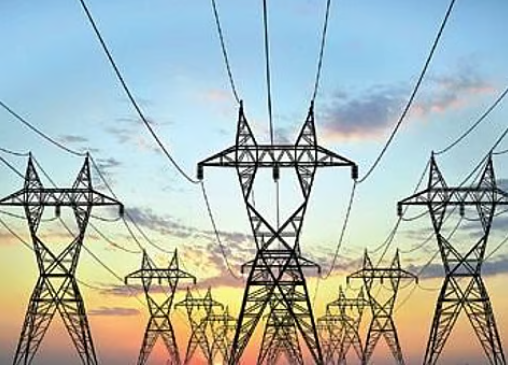
Consider what this means in practice. Data centres are among the most power-hungry facilities in existence. To serve their electricity needs, massive transmission infrastructure must be planned, built, and maintained. Steel towers,High-voltage lines and substations. All of this costs money public money, channelled through public utilities.
And for twenty years, not a rupee of it can be recovered from the end users who benefit from it. This is not a reform. This is not even a particularly creative industrial package. It is a straightforward transfer of infrastructure costs from a private corporation to the public, disguised in the language of investment attraction. The bill will be paid not by the data centre, not by its shareholders, not by the Chief Minister but by the citizens of Andhra Pradesh, through the weakened financial health of their DISCOMs and the increased subsidy burden on their government.
The Visionary and His Record
Chandrababu Naidu has described himself as a visionary so frequently, and with such evident sincerity, that the claim has acquired the quality of established fact in certain circles. The TDP media ecosystem has done its part to cement this reputation. But reputations must eventually answer to records, and the record of the power sector under the previous TDP government of 2014-19 tells a story that the current media offensive cannot erase.
At the time of Andhra Pradesh’s bifurcation, the aggregate debt of the state’s power sector corporations stood at ₹26,658 crore. Add payables to power suppliers, and total liabilities were approximately ₹29,551 crore.
By March 31, 2019 after five years of TDP governance, debt alone had risen to ₹64,674 crore, and payables to power suppliers stood at ₹21,540 crore. Total liabilities had reached ₹86,215 crore.
In five years, the power sector’s liabilities had nearly tripled. The compound annual growth rate of debt during the TDP period was 24%. The accumulated losses of state distribution utilities had ballooned from ₹6,625 crore to ₹28,715 crore a more than fourfold increase.
This occurred, it must be noted, despite Andhra Pradesh participating in the UDAY programme, under which ₹8,255 crore was released as capital grant to DISCOMs. Without that lifeline, the figures would have been even more alarming.
Under-release of subsidy to DISCOMs and what analysts describe as inefficient power sector management. During this period, the TDP government executed long-term Power Purchase Agreements at tariffs that were significantly above prevailing market rates solar power at ₹6 to ₹7 per unit when the average procurement cost was below ₹4 per unit and wind power at ₹4.84 per unit. These are long-term contracts. Their burden does not disappear when a government changes. The DISCOMs and ultimately the public continue to pay for those decisions today.
In contrast, the YSRCP government released ₹47,800 crore in subsidy and support to DISCOMs over its five-year tenure, against ₹13,255 crore released under TDP in the previous five years a difference of nearly ₹34,500 crore.
A visionary, by reasonable definition, is someone whose decisions, when examined in hindsight, reveal foresight and wisdom. By that standard, the 2014-19 power sector record is not the portfolio of a visionary. It is a cautionary tale.
Conclusion: The Public Deserves the Fine Print
Andhra Pradesh is not a state that can afford reckless fiscal generosity toward large private corporations. It is a state with a ₹14,437 crore annual power sector revenue gap. It is a state that is raising loans to pay hospitals for treating the poor. It is a state where agricultural consumers pay less than one rupee per unit of electricity because the public policy consensus holds that farming communities deserve protection.
Every concession granted to a data centre every transmission charge waived, every high-paying consumer allowed to exit the DISCOM network makes that protection harder to sustain. The public of Andhra Pradesh deserves to know not just the headline, but the full account. Not just what the Chief Minister is claiming credit for, but what it will cost, who will bear that cost, and whether the foundations of the policy were built by this government at all.
On all three counts, the data centre “revolution” falls embarrassingly short of the billing it has received. Vision, after all, is not measured by press releases. It is measured by what you leave behind.