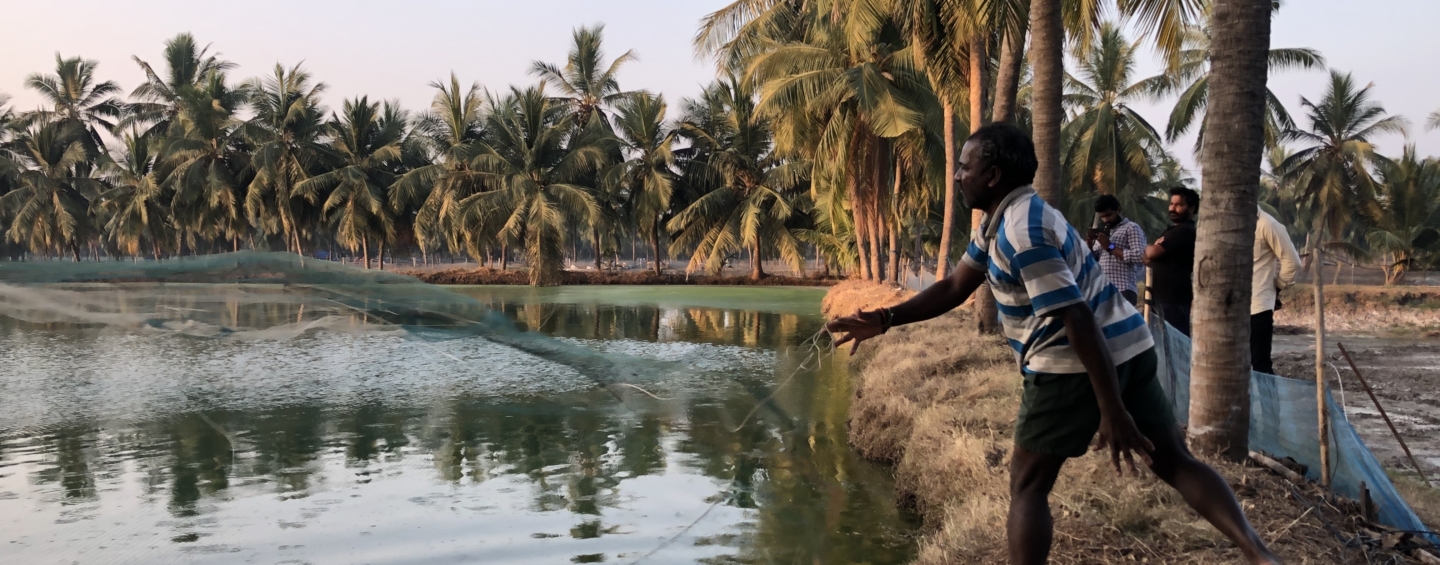
Andhra Pradesh’s aquaculture sector, once celebrated as the pride of India’s blue economy, has been plunged into a devastating crisis. Through an aggressive and unilateral manipulation of raw material markets, corporate syndicates backed by institutional apathy have launched an all-out assault on the livelihoods of small and marginal shrimp farmers.
What was meant to be a heavily regulated framework to protect primary producers has been systematically bypassed. Today, aqua farmers are being forced into financial ruin as a cartel of feed manufacturers spikes operational costs overnight, entirely ignoring statutory safeguards and stakeholder consensus.
Violating Regulations: A Unilateral Assault on Farmers
Under standard regulatory guidelines specifically the Andhra Pradesh State Aquaculture Development Authority framework—any adjustment in aqua feed prices must undergo strict scrutiny. Prices can only be altered after formal consultations with all key stakeholders, including aquaculture farmers, farmers’ association leaders, and state representatives.
However, corporate entities have completely bypassed these legal guardrails, bowing to syndicate pressures and leaving primary producers vulnerable. The raw financial shock of this recent unilateral price hike is starkly visible in the surging cost structure of essential feed brands:
| Feed Variant | Old Price per Ton (Including Taxes) | Newly Imposed Price per Ton | Absolute Hike per Ton | Additional Burden on Farming Community |
|---|---|---|---|---|
| Vannamei Feed | ₹1,01,720 | ₹1,11,720 | ₹10,000 | ₹1,294 Crore |
| Tiger Feed | ₹1,12,520 | ₹1,24,520 | ₹12,000 | ₹280 Crore |
Corporate entities have issued direct notices increasing invoice prices by ₹10.00 per kg for Vannamei variants and ₹12.00 per kg for Hybrid variants. This reckless push has forced an aggregate financial strain of over ₹1,574 crore onto an already struggling agrarian community.
Corporate Cartelization and Institutional Failure
The timeline of this crisis exposes a deliberate alignment between the manufacturing syndicate and administrative leadership. Feed manufacturers initially attempted an aggressive hike of ₹8,420 per ton for Vannamei and ₹10,520 per ton for Tiger feed, which triggered widespread outrage among farming communities. While an initial pushback forced a temporary deferral, subsequent backdoor maneuvers completely sidelined the interests of genuine farmers.
The progressive degradation of stakeholder negotiations showcases how the system was rigged:
| Stage of Negotiation | Stand of Genuine Aqua Farmers | Stance of the Corporate Syndicate | Administrative Response / Outcome |
|---|---|---|---|
| Initial Proposal | Complete rejection of arbitrary cost increases | Demanded a minimum hike of ₹12,000 to ₹14,000 per ton | Deferred temporarily due to immediate public anger |
| Secretariat Meeting | Boycotted the unfair pricing proposals | Insisted on escalating costs citing raw material pressures | Key administrative heads chose to skip the critical mediation |
| The Backdoor Compromise | Firm opposition to any cost exceeding sustainable limits | Manufactured a fake consensus with select friendly groups | A nominal “agreement” of a ₹6,000 hike was weaponized to pass a massive ₹10,000+ hike |
Rather than standing as a shield for vulnerable primary producers, the administration actively paved the way for corporate exploitation. During crucial mediation windows, the line ministry systematically looked the other way, failing to enforce regulatory compliance. Corporate leaders with close ties to governing circles used friendly producer factions to stage an artificial consensus, which they subsequently weaponized to implement a crushing price hike.
The Crushing Cost of Production: Total Agrarian Distress
The economic consequence of this corporate-led market manipulation is catastrophic. The trajectory of feed prices combined with the resulting baseline production expenses paints a grim picture for local cultivators:
| Year / Timeline | Vannamei Feed Price (Per Ton) | Estimated Baseline Cost of Production (Per Ton) | Impact on Small and Marginal Pond Owners |
|---|---|---|---|
| 2023 Baseline | ₹72,000 | Manageable & Sustainable | Allowed stable profit margins and sector growth |
| Early 2026 | ₹1,01,720 | Heightened Financial Strain | Compressed operational margins across coastal belts |
| June 2026 (Current) | ₹1,11,720 | ₹3,00,000 (Tiger Shrimp: ₹4,00,000) | Immediate threat of bankruptcy and distress sales |
This sudden jump in input costs has fundamentally broken the back of rural aquaculture. Small pond owners, who form the backbone of the state’s coastal economy, are staring at immediate bankruptcy. They are being crushed between artificially inflated feed prices on one end and highly volatile international export rates on the other.
By allowing private feed corporations to operate entirely outside the boundaries of the law, the current regime has turned a blind eye to the systematic looting of its own farmers. A sector that could have generated billions in wealth for local communities is instead being milked to satisfy the insatiable greed of a few well-connected corporate syndicates.
For an objective look at how escalating input costs and systemic market neglect are creating severe stress across the state’s coastal belts, see this report on the Andhra Pradesh Aqua Farmers Crisis, which covers the financial anxieties of small-scale producers fighting to keep their operations viable amid unmitigated cost shocks.