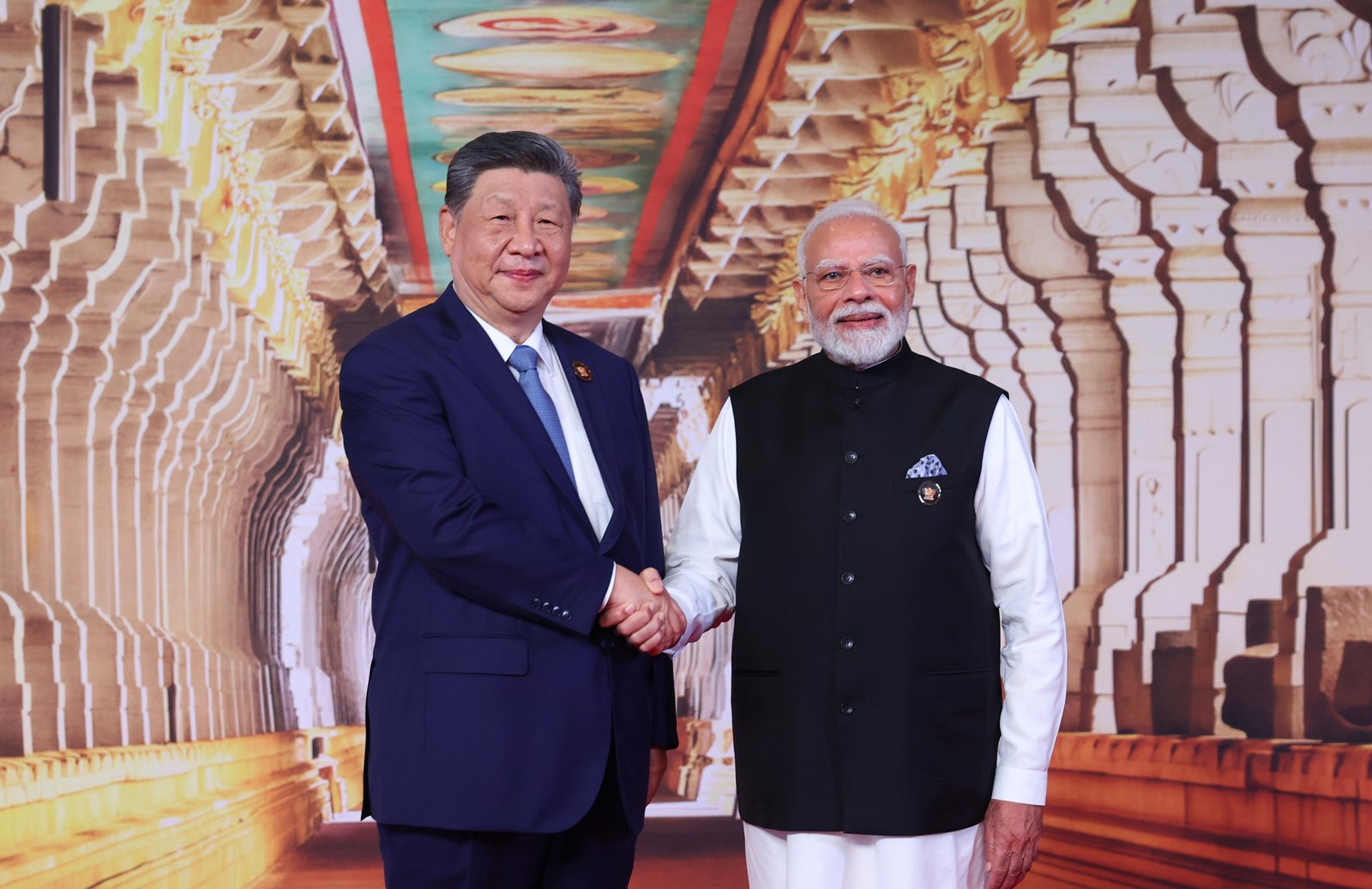
New Delhi, Sep 12: Chinese President Xi Jinping arrived in New Delhi on Saturday for a two-day visit to attend the BRICS Summit, marking his first trip to India in seven years. His visit is seen as a key opportunity to further normalise India-China relations and strengthen trade and investment ties.
Prime Minister Narendra Modi is scheduled to hold bilateral talks with Xi at 6 pm on Saturday. The two leaders are expected to review the overall state of bilateral relations, with discussions likely to focus on the Line of Actual Control (LAC), border peace, trade, investment and measures to deepen engagement.
Xi’s visit comes amid a series of high-level diplomatic exchanges between the two countries. National Security Adviser Ajit Doval and Chinese Foreign Minister Wang Yi recently held Special Representative talks in Beijing on the boundary issue, trans-border cooperation and maintaining peace along the LAC.
India-China relations had come under severe strain following the military standoff in eastern Ladakh. In recent months, however, both sides have taken several confidence-building measures aimed at rebuilding trust and restoring normal ties.
Xi was received at the Delhi airport by Union Minister Jitin Prasada, while cultural artistes performed traditional dances to welcome the Chinese President.
Xi’s delegation includes senior Chinese officials, including Cai Qi, a member of the Standing Committee of the CPC Politburo, and Foreign Minister Wang Yi.
According to media sources the upcoming Modi-Xi meeting is expected to assess progress along the LAC and explore further steps to stabilise bilateral ties. Both sides are also likely to discuss expanding economic engagement through greater trade and investment.
The two leaders had held extensive talks on the sidelines of the Shanghai Cooperation Organisation summit in Tianjin last year.
Chinese Ambassador to India Xu Feihong said China is ready to work with India to follow the strategic guidance of the two leaders, enhance communication and cooperation, properly manage differences and promote good-neighbourly relations.