The TDP came to power in 2024 on a platform that prominently featured good governance, law enforcement, and economic development. The “Swarnandhra” vision promised a transformed state, transparent, investment-friendly, and free from corruption.
Natural resources are being extracted illegally at scale. The enforcement machinery is fragmented and allegedly compromised. Seized vehicles are being released on instructions. Blacklisted operators are resuming operations.
The free sand policy, characterised as a consumer welfare measure has been implemented without the monitoring infrastructure necessary to prevent exploitation. Residents and experts call for check posts at vulnerable border points, round-the-clock monitoring, and joint enforcement teams comprising officials from both AP and Telangana.
How the Free Sand Policy Became a Smuggling Opportunity
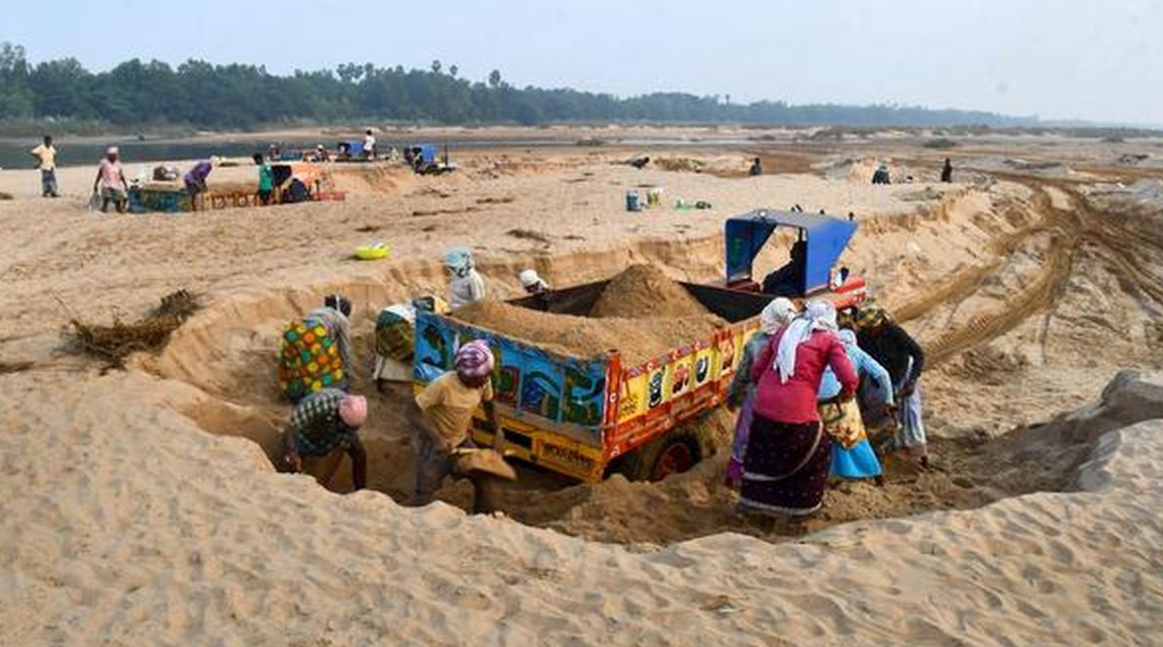
The TDP government’s free sand policy, which came into force on July 8, 2024, under the policy, consumers can extract up to 20 tonnes of sand per day for personal use, with exemptions on seigniorage fees and other costs.
Sand in Andhra Pradesh is available for under ₹1,000, but in Telangana, the same sand commands around ₹2,500 per tonne more than double the price.That price differential is not a policy outcome. It is an invitation and organised groups, including ruling politicians, have responded to it with industrial efficiency.
The free sand policy, designed to support AP’s construction workers and homebuilders, has become a subsidy for an inter-state smuggling network. It is a perennial challenge in states with rich river systems and high construction demand. What is new is the scale, the organisation, and the apparent inability or unwillingness of the current government to address it.
According to local sources cited in the Hans News article, these groups book sand through official AP channels using the names of villages in mandals like Jeelugumilli, Chintalapudi, and Chatrai in the erstwhile West Godavari region and then divert the sand to Telangana under the pretext of local usage. The state border in these areas lies just a few kilometres from the booking locations. A short drive of up to two kilometres is enough to cross into Telangana, enabling what the report describes as illegal transport “with minimal risk.”
There have been moments of enforcement. In the first week of April, vigilance officials from Warangal conducted raids in Sathupalli mandal of Khammam district on the Telangana side and seized three lorries carrying sand from Kovvur in Andhra Pradesh. Cases were registered. A preliminary inquiry revealed the network had been operating for nearly six months.
But these enforcement actions are described as rare exceptions that prove the rule of systematic non-enforcement. More troubling are the allegations that accompany even these rare actions. Locals claim that some of the vehicles seized in enforcement actions were later released under “instructions from above.” Previously blacklisted vehicles, lorries that had been identified in prior illegal mining cases, have reportedly resumed operations. The implication is that enforcement, when it does occur, is not allowed to run its course. An illegal mining network that can get seized vehicles released and blacklisted operators reinstated is not a network that fears enforcement. It is a network that has captured the enforcement process itself.
Beyond Sand : AP’s Illegal Mining
The allegations extend beyond sand. The broader illegal mining landscape, rock quarrying and construction material sourcing are under scrutiny across the state. Illegal mining activities are happening near Gudur (silica), Venkatagiri (quartz), and sand mining in the Satyavedu constituency as alleged by Congress in Nellore, if substantiated, would be among the largest natural resource scams in recent AP history.
At its core, illegal mining under the TDP government represents the same failure that characterises the drug budget cuts, the Aarogyasri dues, and the MGNREGA collapse: a government that is present for the rhetoric of development but absent for the governance that development requires. Rivers are being stripped. Public resources are crossing state borders. The poor who were supposed to benefit from free sand are watching that sand disappear to Telangana while organised networks pocket the profit.