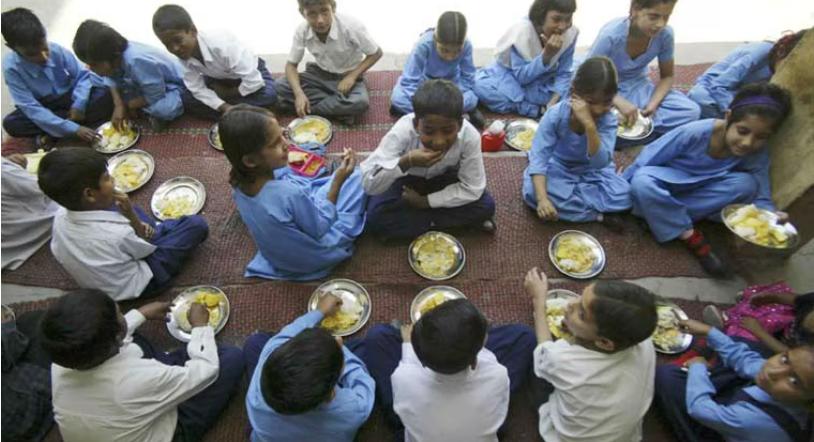
There is a moment in the life of every policy when it stops being a programme and becomes a habit. When the morning bell rings and children line up not because they are told to, but because they are hungry and they trust what is coming. Andhra Pradesh came close to that moment between 2019 and 2024. Today, it is moving away from it. This is the story of a meal. And of what happens when a genuine effort to feed children is dismantled by the next government that comes along.
The Problem That never got Govt Serious Attention :
Long before YS Jagan Mohan Reddy or N. Chandrababu Naidu made mid-day meals a talking point, the programme was limping. The National Mid-Day Meal Scheme launched nationally in 1995 had for decades suffered the same complaints in Andhra Pradesh for decades .A scheme that existed on paper far more convincingly than it existed in practice.
For children from poor families in Krishna, Guntur, and Srikakulam districts, the meal was often the only full one they would eat all day. Yet the quality and the dignity of that meal was treated as an afterthought by successive governments for nearly three decades. That was the situation before YS Jagan Mohan Reddy came to power in June 2019.
What Jagan Actually Did ?
When the YSRCP government came to power, one of the first things it looked at seriously was what children in government schools were actually eating. The annual expenditure for the mid-day meal scheme, known as ‘Jagananna Goru Muddha‘ in Andhra Pradesh, increased budget to ₹1,824 crore, compared to approximately ₹450 crore spent annually by the previous Telugu Desam Party (TDP) government.Not what the menu said. Not what the budget showed. What was actually landing on the plate.
What they found was not good enough, So they changed it. Eggs were introduced four days a week a basic protein that nutritionists had been asking for years but that previous governments had kept deferring because of the cost. Seasonal vegetables replaced the same cheap fixed staples that had been rotated for years. In some districts, bananas and milk were added. The menu started to look like something a child might actually want to eat.
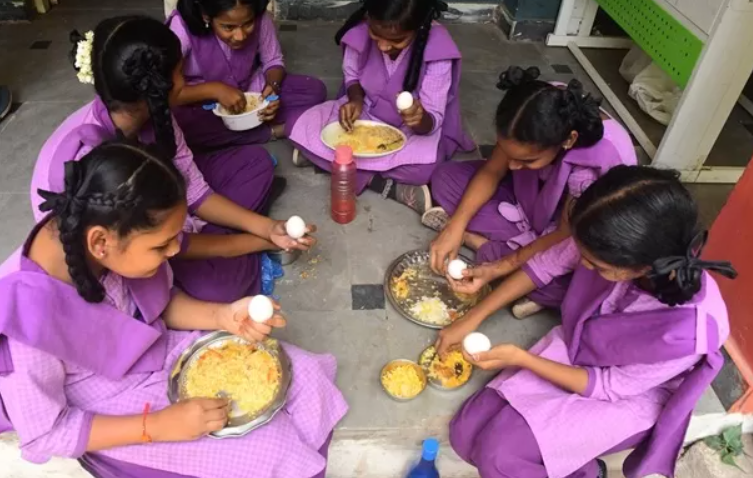
The budget per student was increased and the state absorbed the gap between what the central government contributes and what a decent meal actually costs. That is not a small decision. It means choosing to spend state money scarce state money on feeding schoolchildren better, knowing there is no headline or ribbon-cutting attached to it.
Just as importantly, the government built a monitoring system on the ground. Village and Ward Secretariat volunteers deployed as part of the YSRCP’s wider administrative restructuring were given responsibility for watching over meal preparation at the school level.
The results showed. Attendance improved in districts where the meal quality uplift was most visible. Parents who had been packing lunches began letting their children eat at school. The programme was not perfect infrastructure remained uneven, not every supplier was honest, some schools still cooked in difficult conditions. But the direction was clear and the intent was genuine. This was not a government trying to win votes through a meal. This was a government that looked at hungry children and decided to do something real about it.
The Election, the Rebrand, and the Reversal
In June 2024, the TDP-led NDA swept to power. Chandrababu Naidu returned as Chief Minister. One of the first visible changes in the education space came from Deputy CM Pawan Kalyan, who suggested renaming the scheme after Dokka Seethamma a 19th-century philanthropist celebrated for feeding the poor. It was a graceful name. What followed was less graceful.
The rebranding happened quickly. The substance did not survive the transition.
The Ward and Village Secretariat monitoring network that had kept quality in check was wound back it was a YSRCP creation and was dismantled as part of the broader rollback of the previous government’s administrative structures. The additional menu charges that had supplemented per-meal costs were withdrawn. The state-level top-up that had made the meals viable was quietly allowed to lapse. And then the complaints started coming in.
Current Situation
The government announced the scheme would be extended to 475 Government Junior Colleges from January 2025. Broader coverage is welcome. But expanding a programme that is already failing in schools into colleges risks widening the problem rather than fixing it.TheState Food Commission Finds Lapses in Anganwadi, Mid-Day Meal Scheme in several distcricts and repeated complaints of Poor Mid-Day Meal Quality in Schools . A Viral video surfaced showing children dumping food into a dustbin due to poor quality in Mylavaram School.
The Budget Paradox
The 2026-27 budget allocated ₹2,161 Crore to the Dokka Seethamma scheme That number looks like commitment. On the ground it tells a different story.
Spread across approximately 42 lakh beneficiaries over 220 school days, it works out to roughly ₹23.40 per student per meal. People’s Pulse had said the minimum for a genuinely nutritious meal was Rs. 30. The scheme is still six rupees short and across 42 lakh children over 220 days, that gap adds up to over ₹550 Crore of unmet nutritional investment every year.
The budget grew 54% in four years. The food quality did not grow with it. What grew instead were the administrative costs, the junior college extension, and salary revisions. The ingredient quality the thing the child actually tastes remained at the bottom of the priority list.
Two Names. Same Children. A Different Commitment.
Jagananna Gorumudda and Dokka Seethamma Madhyahana Badi Bojanam are, underneath the names and the politics, the same programme. The same kitchens. The same children. The same hunger.
What the YSRCP government understood and acted on was something simple: that a child who eats well learns better, stays in school longer, and grows up healthier. Not as a campaign slogan. As a governing belief. Jagan’s government put real money into the per-meal budget, brought eggs and protein onto the menu, built a monitoring structure that reached down to the village level, and accepted the fiscal cost without fanfare. There was no ribbon-cutting for a better plate of rice. No inauguration for an extra egg. Just a quiet, sustained effort to make sure that the one meal a poor child could count on each day was actually worth eating.
That effort was not finished when the YSRCP left office. It was a work in progress. But it was moving in the right direction and the children could taste the difference.
What the TDP government chose to do with that foundation is now visible in the numbers and in the reports from the ground. The monitoring was dismantled. The budget top-ups lapsed. The per-meal spend stayed below what nutrition requires. And the children who did not vote, who do not hold press conferences, who simply show up to school and push a plate of stale rice away are the ones paying the price.
A government is ultimately measured not by the schemes it names, but by the meals it actually delivers. Right now, too many children in Andhra Pradesh’s government schools are going hungry in plain sight not for lack of a budget line, but for lack of the will to make that budget line mean something real.