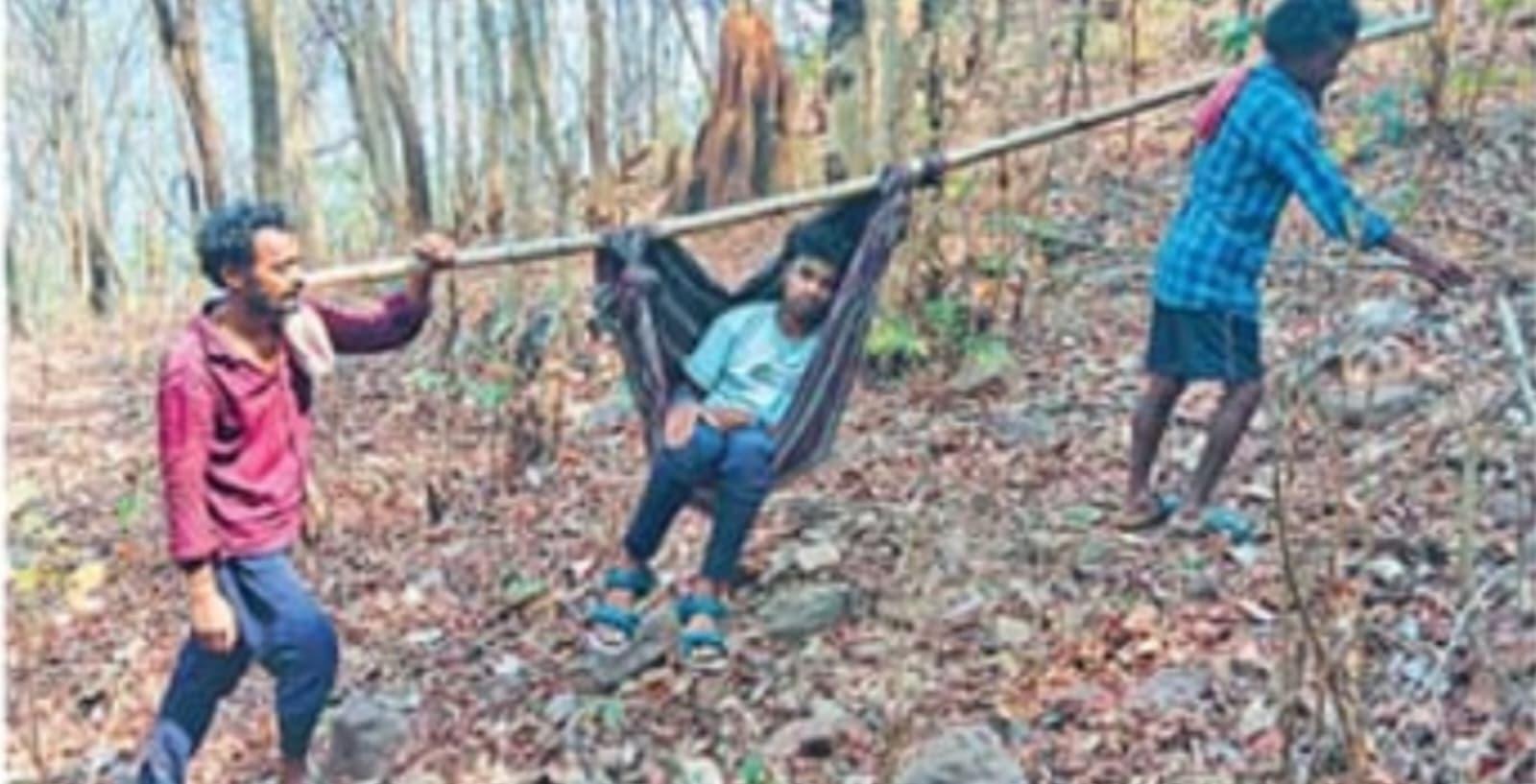
How many more people have to be carried on poles before the government wakes up? In a display of systemic neglect that feels more like the 19th century than 2026, 19-year-old Kosuri Gopichand was forced to endure an agonizing “8 km journey in a doli” just to reach medical help.
Gopichand, a resident of Dabbalapadu village, suffered through a high fever for four days because the state has failed to provide even the most basic road connectivity to these hilltop tribal regions. His neighbors had to act as a human ambulance, trekking through rugged terrain to Pedaraba simply because a motorized vehicle cannot reach their homes.
This isn’t just about a lack of roads; it’s a total abandonment of public health:
Empty Promises on Water: Despite a formal complaint submitted through the government’s own grievance system (PGRS) on April 17, authorities have taken zero action to provide safe drinking water to Dabbalapadu.
Poisoned Springs: Residents are being forced to drink from open streams, leading to a surge in illness that has even sidelined local health workers.
Negligent Disease Control: The spread of malaria in villages like Moralova is being blamed on the government’s failure to conduct regular anti-larval spraying.
While officials sit in comfortable offices, the people of the ASR district are left to carry their sick through the dirt. It is a disgrace that in this day and age, “healthcare” in the hilltop villages depends entirely on the physical endurance of the community rather than the responsibility of the state.