State brought to a standstill as governance takes a backseat
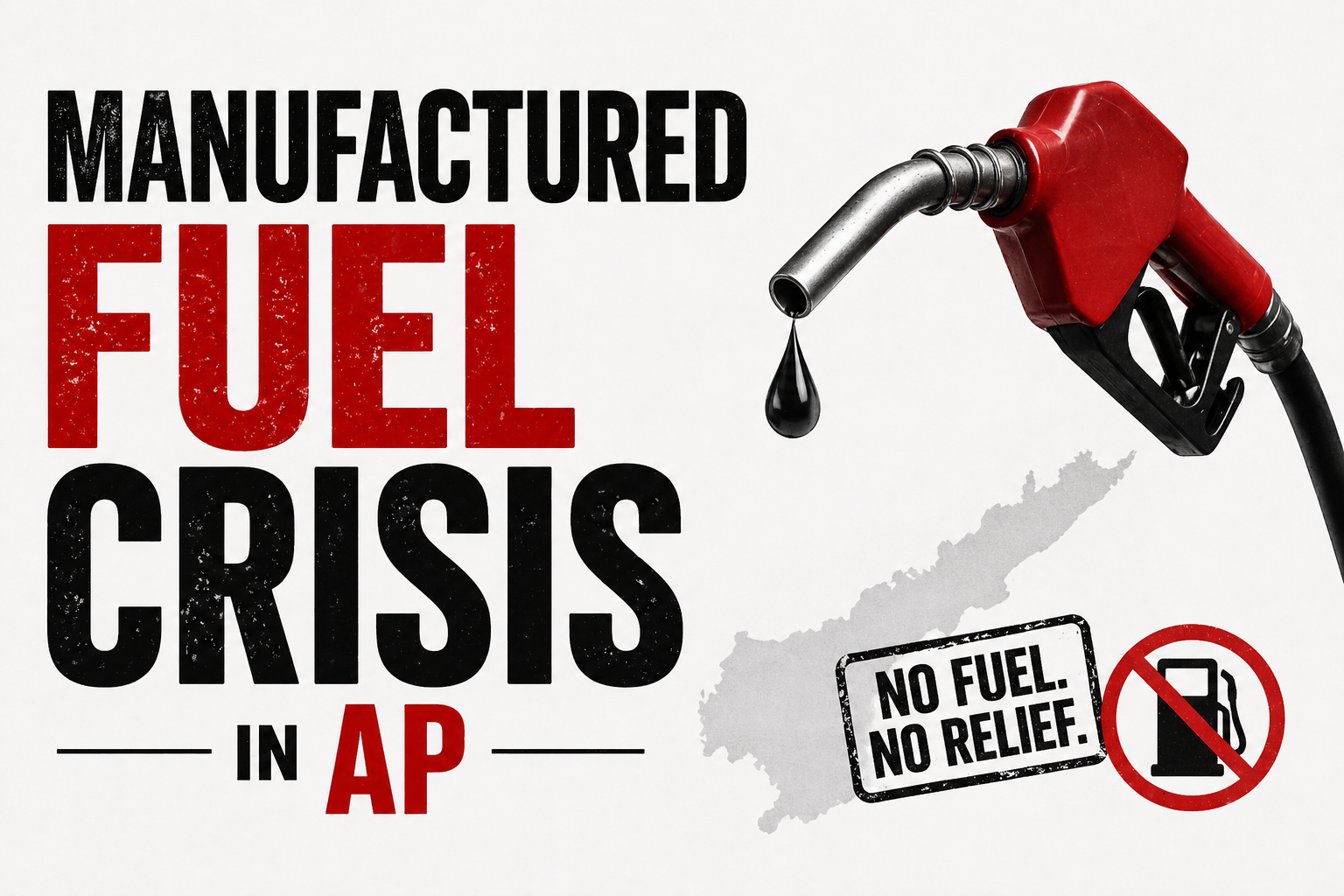
Andhra Pradesh is facing an alarming fuel crisis that has crippled daily life, disrupted agriculture, and paralysed transport systems. What appears on the surface as a supply issue is now being widely seen as a deliberately engineered shortage, exposing deep governance failures. Across the state, petrol bunks have run dry, long queues have become the norm, and roads resemble a curfew-like situation. Yet, even as public distress intensifies, the government appears disengaged, ministers on foreign tours, leadership missing in action, and no serious review of the crisis.
The Smoking Gun
At the heart of the controversy lies a crucial document. The letter issued by Civil Supplies Commissioner K. Kanna Babu on April 24, 2026 stands as clear and undeniable proof that the Chandrababu government diverted large volumes of diesel toward Amaravati construction, triggering a statewide shortage.
The letter directed Oil Marketing Companies to supply a massive 27,566 kilolitres of High-Speed Diesel, exclusively for Amaravati capital works until July 2026. This volume is enough to power thousands of vehicles and agricultural operations for weeks. Even more alarming, the directive instructed that this bulk diesel be routed through retail petrol bunks, a move that is illegal, unsafe, and a violation of established norms.
The State runs out of Fuel
Within days of this directive, the consequences became visible across Andhra Pradesh.
- Over 400 petrol pumps ran dry
- Farmers struggled to harvest Rabi crops
- Transporters were pushed to a standstill
- Citizens resorted to panic buying and long queues
People carrying fuel cans, vehicles stranded on roads, and endless queues at fuel stations have become common visuals. With uncertainty looming, many have stayed indoors, turning cities into zones resembling an unofficial curfew.
Not a Coincidence, but a Pattern
This crisis is not being viewed as accidental. While the entire state grappled with fuel scarcity, the government appeared focused on ensuring uninterrupted diesel supply for its pet Amaravati project. The prioritisation of construction machinery over citizens’ basic needs has drawn sharp criticism from multiple sections of society.
Centre steps-in: Illegal Orders flagged
The gravity of the situation forced intervention from the Union Government. On April 25, 2026, Petroleum Secretary Dr. Neeraj Mittal issued a strong communication condemning the Andhra Pradesh government’s directions as illegal and violative of Petroleum Rules 2002, PESO guidelines, and public safety norms. The state was asked to withdraw the instructions immediately.
Denial vs Ground Reality
Despite the visible crisis, Civil Supplies Minister Manohar claimed there was no shortage of stock, attributing the issue merely to supply disruptions. This has raised serious questions:
If stocks exist, why are petrol bunks displaying “No Stock” boards and shutting down operations?
Instead of addressing the issue, the government appears focused on damage control through statements and narrative management.
Leadership Missing, Ministers on Leisure Mode
Even as the state reels under crisis, several ministers—including Home, Agriculture, Municipal, Revenue, Health, and R&B ministers—are on a Singapore tour under the pretext of training. Meanwhile, Chief Minister Chandrababu Naidu continues to travel between cities like Mumbai and Visakhapatnam, without conducting any serious review. This disconnect has reinforced perceptions of a government indifferent to public suffering.
A Familiar Pattern of Shortages
This is not an isolated failure. In recent months, Andhra Pradesh has witnessed:
- Urea shortages forcing farmers into queues
- Seed shortages disrupting agriculture
- LPG scarcity leading to long wait times
The fuel crisis now adds to a growing list of governance failures marked by poor planning and reactive responses.
Media Narratives and Blame Shifting
While citizens struggle, sections of the media have attempted to shift blame onto oil companies and civil supply officials, instead of questioning the government’s decisions. Critics argue that such narratives are aimed at shielding political accountability.
The Larger Question: Who Pays the Price?
The letter by K. Kanna Babu stands as conclusive evidence that the government prioritised Amaravati construction for contractors over the lives and livelihoods of farmers, transporters, and common citizens. By diverting essential diesel, an artificial shortage was created, leading to widespread disruption.
Today, the people of Andhra Pradesh are paying the price:
- Empty fuel stations
- Stalled agricultural activity
- Paralysed transport networks
- Rising black-market fuel sales
- Severe hardship for ordinary citizens
Conclusion: Development or Diversion?
What is unfolding in Andhra Pradesh is not merely a fuel shortage, it is a case study in misplaced priorities and administrative failure. This is not governance. This is exploitation in the name of development.