AP Governance paralysed, Law and Order collapses across the State
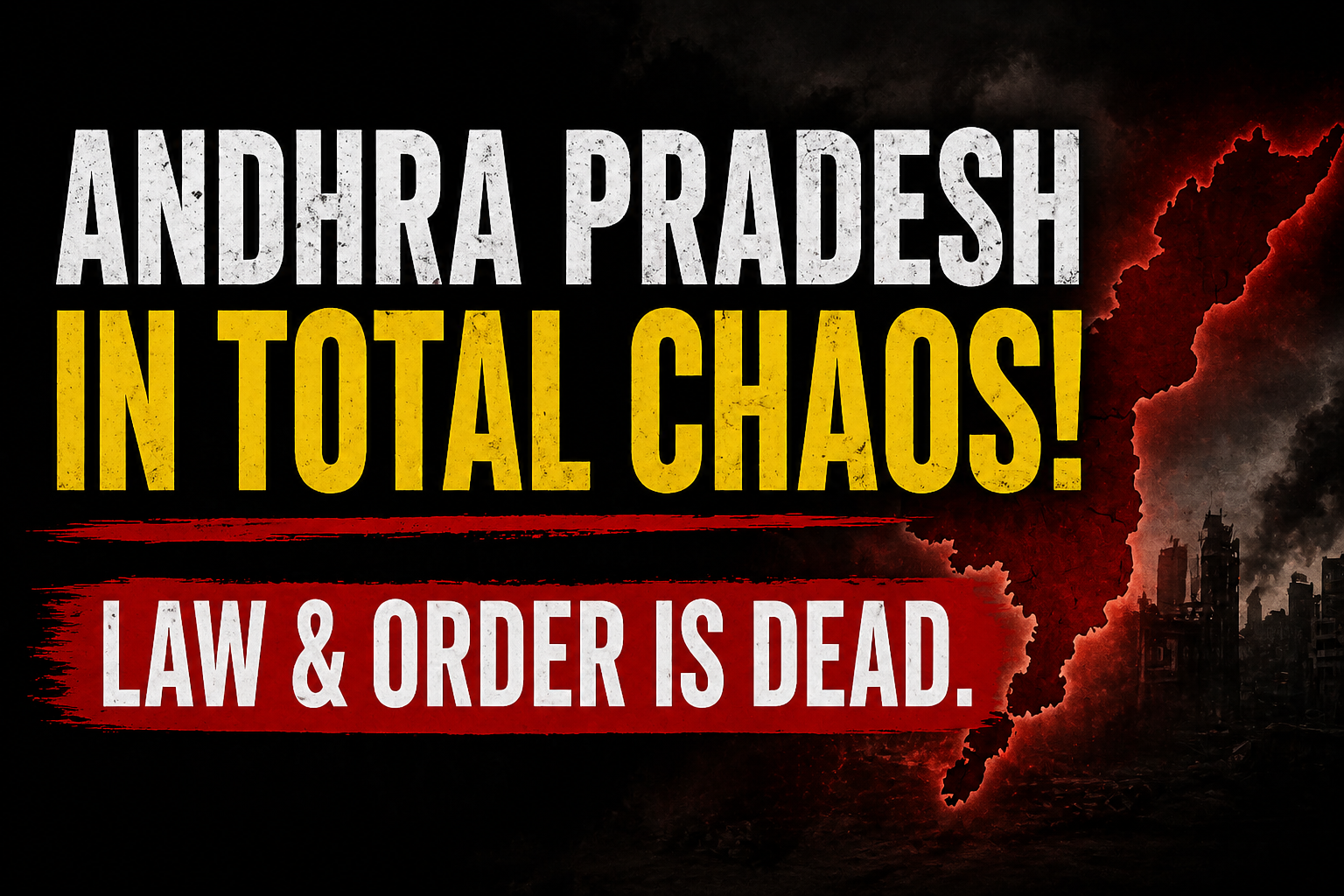
Andhra Pradesh is witnessing a deep and dangerous governance vacuum, where chaos is no longer sporadic, it is systemic. In the span of a single day, the state exposed the extent of its administrative breakdown. Fuel shortages disrupted daily life, lawlessness unfolded openly on the streets, and yet, those entrusted with governance appeared absent.
At a time when citizens are struggling with petrol and diesel shortages, crippling businesses and mobility, the state leadership is nowhere to be seen. The Home Minister and several ministers are on a foreign tour, Nara Lokesh is on a quiet overseas visit, and Chief Minister Chandrababu Naidu is attending business events in Mumbai. The Deputy Chief Minister remains unavailable due to health reasons. This collective absence has created a vacuum where governance has effectively stalled.
Ground reality: Violence without consequence
This absence of leadership is directly translating into a breakdown of law and order. In one of the most shocking incidents, toll plaza employees, including women, were assaulted in broad daylight, dragged, beaten, and humiliated by individuals linked to political power. No immediate or strong legal action followed. Such incidents are no longer exceptions, they are becoming routine.
Anantapur as a Case Study of Collapse
The situation in Tadipatri (Anantapur district) is a stark example of this collapse. Within 24 hours, two brutal murders shook the region. YSRCP activist Abdul alias Banda was hacked to death in Yetigaddapalyam, while another case involved the kidnapping and murder of a transgender individual, Mallika. These incidents reflect a complete erosion of deterrence. Illegal activities, ganja, illicit liquor, gambling, are thriving openly, while enforcement remains weak and ineffective.
A disturbing pattern across Andhra Pradesh
Across the state, a deeply troubling pattern is emerging:
- Targeting of YSRCP Cadres: Opposition workers are being killed, as seen in the brutal murder of Abdul, while police appear more focused on filing cases against political opponents than ensuring justice.
- Atrocities Against Dalits: Dalits are being humiliated, assaulted, and even killed. Incidents like a Dalit artist being publicly slapped by a constitutional authority highlight caste-based abuse with no visible consequences.
- Women Under Attack: Women are being assaulted in broad daylight, dragged, harassed, and intimidated, while those responsible face no meaningful action despite video evidence and repeated complaints.
- Toll Plaza Violence: Toll plazas have effectively turned into lawless zones where MLA supporters attack staff, drag women employees, assault managers, and even resort to kidnappings when questioned.
- Abuse of Power by MLAs: There are instances where MLAs have openly obstructed law enforcement, including occupying police offices for hours, yet no cases have been registered.
- Sexual Exploitation Allegations: Multiple allegations against MLAs continue to surface, with victims approaching the media for justice, only to face intimidation and physical threats.
- Exploitation of Minor Girls: Cases involving minor girls are allegedly being settled through money instead of justice, pointing to a serious moral and institutional breakdown.
- Extortion and Industrial Interference: Industries are being threatened, transport operations blocked, and money demanded, turning governance into a system of extraction rather than facilitation.
- Attacks on Officials: Government officials are being threatened and assaulted, reducing the administrative machinery into a powerless entity under political pressure.
- Rise of Illegal Networks: Illegal liquor, drugs, and gambling networks are flourishing, fueling violence and instability, while enforcement agencies remain passive.
Collapse of Policing and accountability
What is most alarming is not just the scale of these incidents, but the complete absence of action. There are no swift arrests, no visible accountability, and no deterrence. The police system appears paralysed, selectively active when it comes to political opponents, but ineffective against those linked to power. This selective enforcement has eroded public trust and emboldened lawlessness. When the rule of law is not applied uniformly, it ceases to exist in practice.
Governance reduced to Optics, Not Responsibility
The broader concern is structural. Governance today appears more focused on optics, events, tours, and political narratives, rather than ground-level administration. The absence of leadership during crises sends a dangerous signal that accountability is optional. One cannot ignore the larger implication: if such a system were tested during a major crisis, the consequences would be catastrophic. The lack of coordination, preparedness, and responsiveness visible today raises serious doubts about the state’s ability to handle emergencies.
From Governance to “Red Book Rule”
What Andhra Pradesh is witnessing today is not governance, it is institutional collapse. Lawlessness has taken root because the fear of punishment has disappeared. Systems have weakened because accountability has been compromised. This is what “Red Book rule” looks like in reality, where the Constitution is sidelined, where law enforcement is compromised, and where citizens are left at the mercy of unchecked political power. If immediate corrective action is not taken, the state risks sliding deeper into a condition where democracy weakens, institutions fail, and chaos becomes the norm.