Retaliation Politics Intensifies
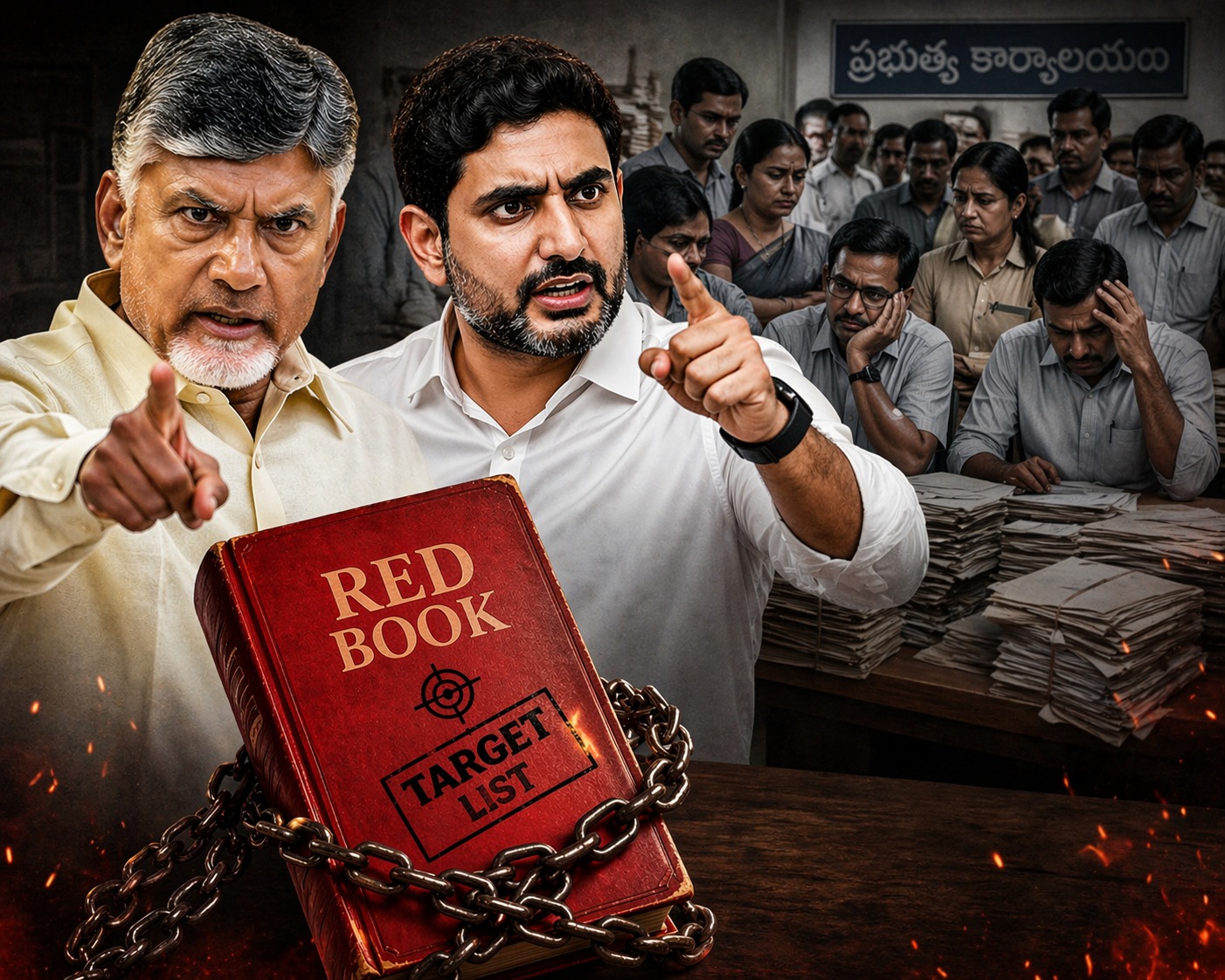
The so-called “Red Book governance” is now increasingly being used as a tool of harassment against government employees in Andhra Pradesh. Instead of addressing legitimate demands, the coalition government is resorting to vindictive actions, creating an atmosphere of fear and suppression within the administrative system.
The dismissal of Government Employees Federation Chairman Venkata Ramireddy has sparked widespread outrage. His only “fault,” critics argue, was raising concerns about unfulfilled promises and unresolved employee issues. Even as the government completes nearly two years in power, employees allege that none of the assurances made during elections have been honored.
Questioning Government Seen as an Offence
Employee unions claim that raising questions about pending issues—such as PRC implementation, Dearness Allowances, and arrears—has led to systematic targeting. Despite promises, four DAs remain pending, PRC has not been constituted even after delays of over three years, and dues have reportedly crossed ₹40,000 crore.
Outsourcing workers, pensioners, and secretariat staff continue to face uncertainty, with multiple promises—from wage hikes to pension reforms—remaining unfulfilled. In contrast, employees are increasingly being subjected to intimidation and legal harassment when they demand accountability.
Targeting Officials and Officers
The alleged misuse of power is not limited to employee unions. Several IAS and IPS officers who served during the previous administration are reportedly facing harassment through false cases, suspensions, and denial of postings. Nearly 199 police officers have been kept without postings, raising concerns over administrative bias.
Senior officers, including those at DG and IG levels, have reportedly been implicated in multiple cases, suspended, or subjected to prolonged legal scrutiny. Critics argue that such actions reflect a pattern of political vendetta rather than administrative accountability.
Selective Action Raises Questions
Observers point to selective enforcement of rules. While employee leaders raising concerns face dismissal, instances from the past—where leaders aligned with the ruling establishment participated in political campaigns—did not attract similar action. This contrast has fueled allegations of double standards in governance.
CI Shankar Reddy Dismissal Sparks Debate
The dismissal of CI Shankar Reddy has further intensified criticism. He was reportedly removed from service after objecting to statements made against him, raising serious concerns about freedom of expression within the police system.
YS Jagan Era Highlighted as Contrast
Supporters of the previous government highlight what they describe as significant reforms and employee-friendly measures during YS Jagan Mohan Reddy’s tenure. These include implementation of 27% Interim Relief immediately after assuming office, 23% PRC despite pandemic-related financial stress, and regular DA releases.
Large-scale employment generation, including 1.36 lakh secretariat jobs, integration of 53,000 RTC employees into government service, and regularisation efforts for contract employees, are cited as examples of a pro-employee approach.
Welfare and Structural Reforms
Significant wage hikes for sanitation workers, ASHA workers, and other categories were implemented, along with structural reforms like the creation of AP Outsourcing Corporation (APCOS) to ensure job security and timely salaries. Additionally, pension reforms, promotions for teachers, and long-pending recruitment issues were addressed during the previous regime.
Growing Discontent
With mounting pressure, employee unions and civil society groups are expressing anger over what they describe as suppression of dissent and erosion of democratic rights. The ongoing developments are being seen not merely as administrative actions, but as part of a broader pattern of political retaliation affecting governance and institutional integrity.