On August 17, 2018, Chief Minister N. Chandrababu Naidu stood before an audience at Bombay Stock Exchange and stated that Amaravati’s full development would require an investment of USD 2 to 4 trillion a figure that, converted to rupees, lands somewhere between Rs. 1,66,00,000 crore and Rs. 3,32,00,000 crore. It is by any measure, an astronomical sum and close to India’s entire GDP. It dwarfs the annual budgets of most nations.
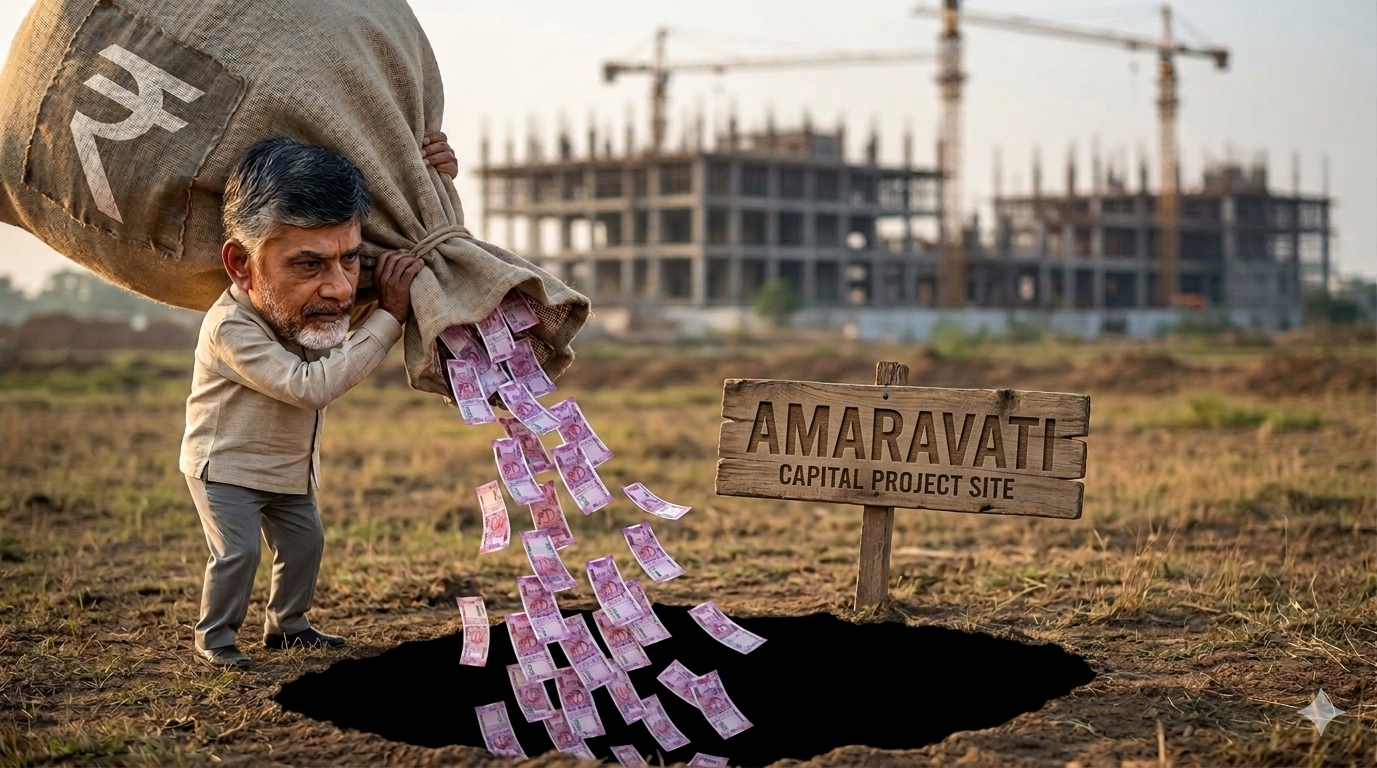
Today, the same Chief Minister routinely describes Amaravati as a self-sustaining capital that will not burden the state’s finances. Both statements cannot be true and the people of Andhra Pradesh deserve to know which one is true.
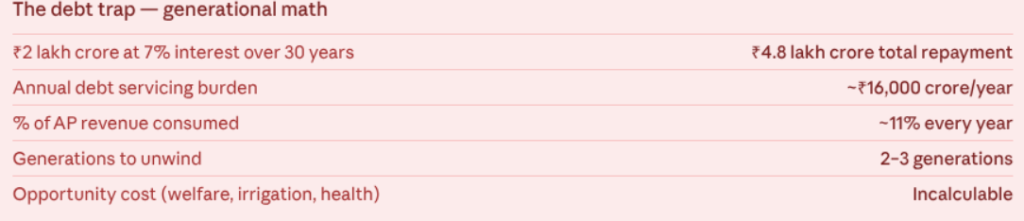
The state government is already bearing significant direct costs like CRDA’s infrastructure expenditure, annuity payments to land-pooling farmers, administrative machinery, international consultancy fees, and judicial costs from the multiple litigations surrounding the project, which are recurring and growing obligations. Now with a second phase of land pooling now on the table, land prices that have risen sharply since 2015, the government’s direct financial exposure is expanding precisely as the state carries one of the highest fiscal deficits among Indian states 4.4% to 5% of GSDP, exceeding FRBM fiscal target of 4%.
The question is not whether Amaravati is a worthy vision. Cities of ambition have always required investment. The question is whether the state’s finances can sustain this vision at this pace, at this scale, and at this moment and whether State is being dragged in to Debt Trap.